10 Little-Known Christmas Facts That Will Surprise You
If you want to impress your friends this holiday season, you might need to add a few obscure facts to your trivia repository. Here are 10 that might just do the trick!
1. Christmas wasn’t always on December 25th.
Most people can’t imagine Christmas happening any other day but December 25th. After all, that’s the day Jesus was born in a manager over 2,000 years ago, right? Contrary to popular belief, Jesus more than likely wasn’t born on December 25th. Historians theorize that the church chose December 25th because the Roman winter solstice festival of the birthday of the Unconquered Sun takes place on the same day. As Jacob Bar-Salibi, a 12th-century bishop and prolific writer once wrote: “It was a custom of the Pagans to celebrate on the same 25 December the birthday of the Sun, at which they kindled lights in token of festivity. In these solemnities and revelries, the Christians also took part.”
2. Christmas decorating sends nearly 15,000 people to the ER.
Many people live for the day they can drag their Christmas decorations out of storage and turn their homes into a wonderful wonderland. Sadly, over 15,000 people visit the ER every year for Christmas decorating-related injuries. A fifth of these injuries involve Christmas lights, while around half involve wreaths, trees, and ornaments. Even artificial trees account for one in ten injuries! As one might expect, many of these incidents also involve chairs and ladders. This holiday season, exercise extreme caution when hanging up lights or trying to reach the highest bough of your tree!
3. Mistletoe is a parasite.
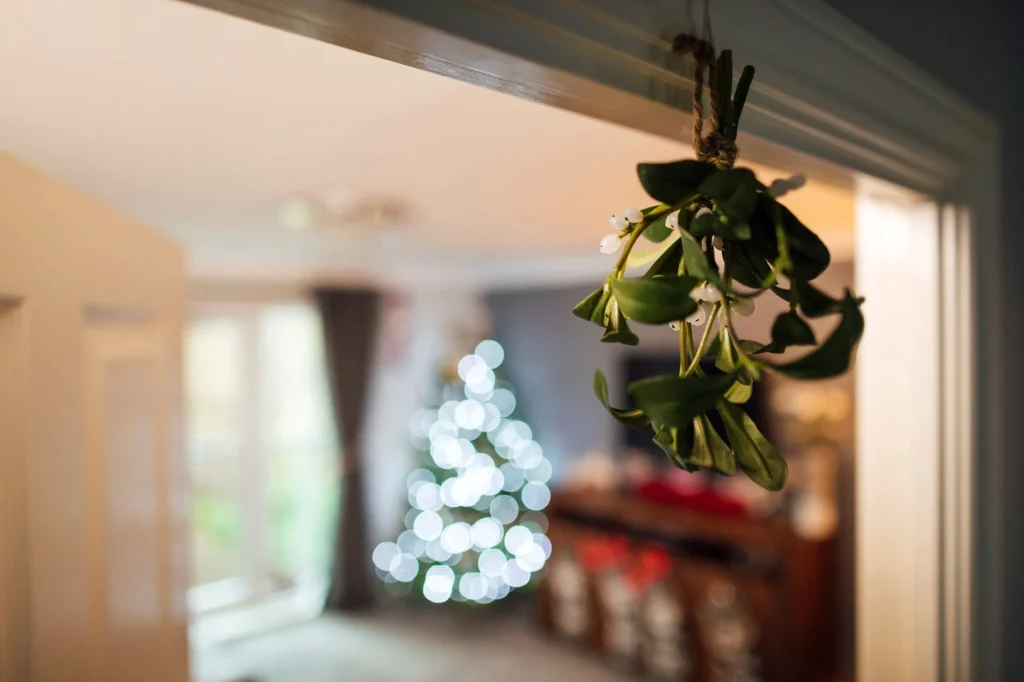
We associate mistletoe with Christmas parties and awkward first kisses. But mistletoe is hardly romantic. In fact, it’s a nutrient-stealing parasite more akin to Stephen King than Nicholas Sparks. “Mistletoe is a hemiparasite—a semi-parasitic plant,” explains Allison Watkins, AgriLife Extension horticulturist for Tom Green County. “It makes its food from photosynthesis, but the roots grow into the host tree, sucking water and minerals out from the sap.” The plant is so hardy that it can survive as long as one hundred years. So much for its romantic reputation!
4. Red wasn’t always Santa’s signature color.
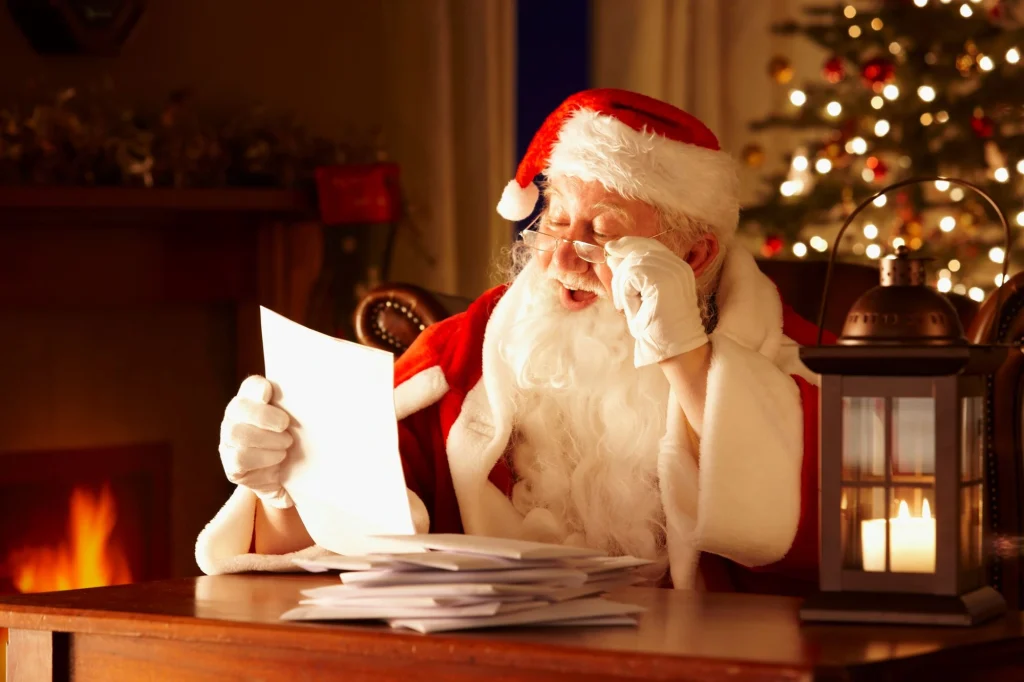
Red is to Santa what green is to the Grinch. It’s almost impossible to imagine Saint Nick without his distinctive red coat, full white beard, and twinkling eyes. But vintage Christmas cards show ol’ Kris Kringle in a variety of colors, including green, yellow, blue, and even brown. It wasn’t until Norman Rockwell depicted Santa Claus in red that it became his signature color. Coca-Cola took a page from the celebrated illustrator’s book and also portrayed the big man in a bright red coat.
5. Ukrainians hang spiderwebs on their Christmas trees.
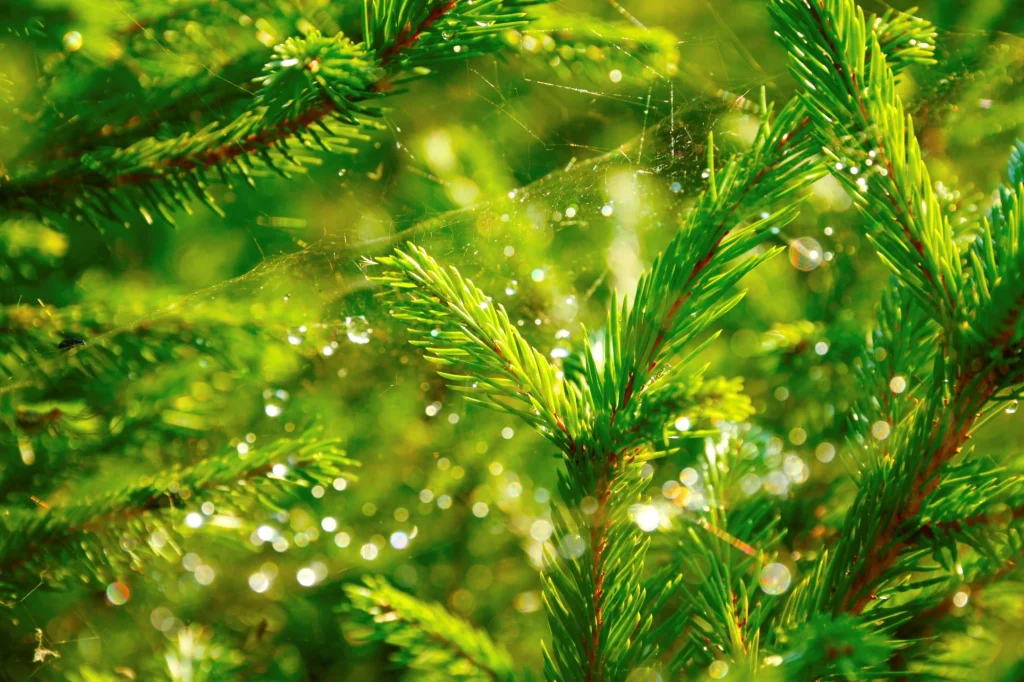
O, Christmas tree. O, Christmas tree. How lovely are your…spiderwebs?! Here in America, we tend to decorate our trees with shiny baubles, snowflakes, angels, and family keepsakes. However, Ukrainians prefer a much different type of decoration: cobwebs. The popular Eastern European tradition began in the late 19th or early 20th century with a folktale called The Legend of the Christmas Spider. The story spawned an opera and a beloved Christmas tradition still popular to this day.
6. Italian children receive presents from a Christmas witch named La Befana.
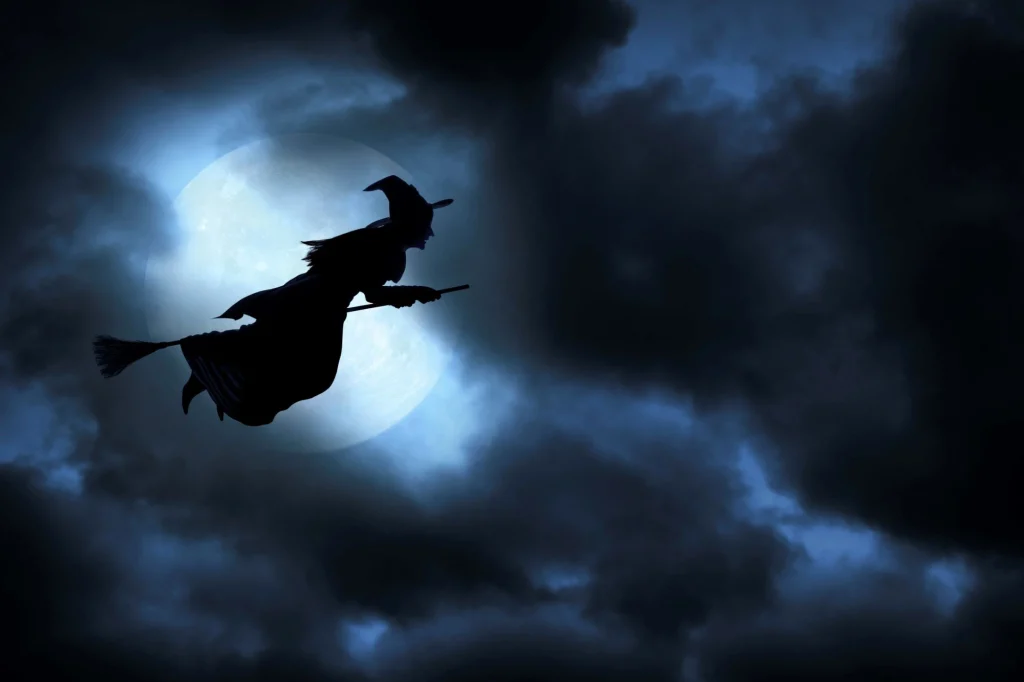
Speaking of things more commonly associated with Halloween than Christmas, have you ever heard of La Befana? According to Italian folklore, this benevolent witch delivers presents to children on Epiphany Eve (or January 6th for us non-Italians). Like Santa, she gives chocolate to the kids who’ve behaved and lumps of coals to the ones who haven’t. Some state that she sweeps the floor before she leaves to symbolize clearing away last year’s troubles. Free chocolate and complimentary housekeeping? Sign us up!
7. The first store Santa Claus appeared in 1890.
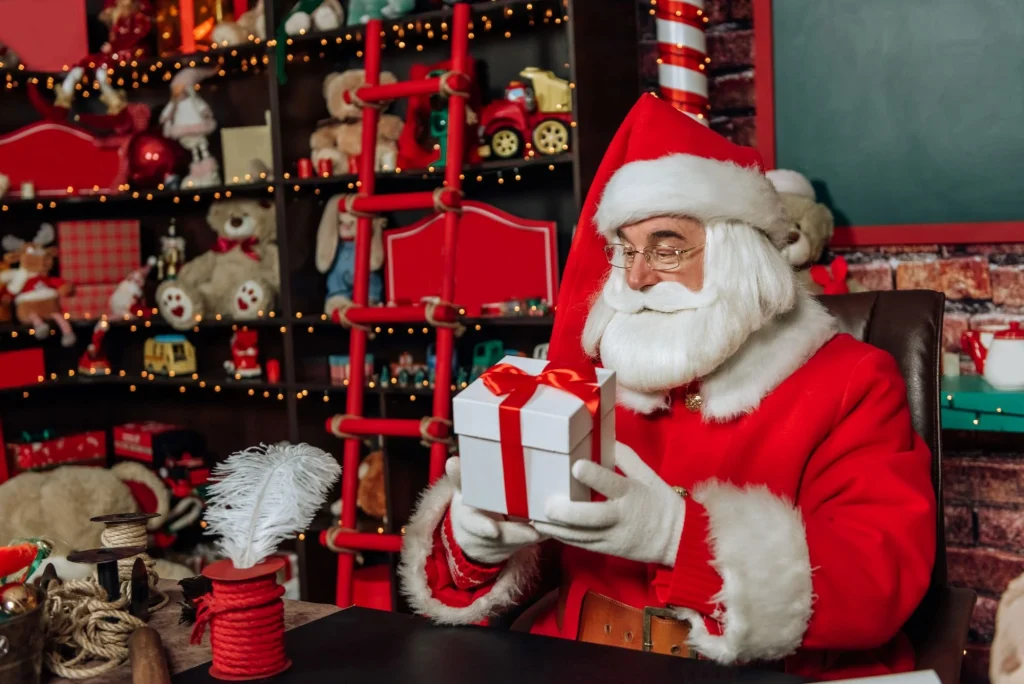
Nowadays, it’s commonplace for various Santas to pop up in malls, banks, churches, and other businesses. However, back in the late 1800s, it was unheard of. That is, until James Edgar, a Massachusetts-based businessman, got a bright idea. He decided to dress up as Santa Claus at his department store, sparking a trend that lasted into the early 1900s and beyond. “My parents had taken me over to the Boston store [Edgar’s] on Main Street. I remember walking down an aisle, and all of a sudden, right in front of me, I saw Santa Claus. I couldn’t believe my eyes,” one man who met Edgar that day later recalled. “And then Santa came up and started talking to me. It was a dream come true.”
8. Wrapping paper was a happy little accident.

Did you know that we might not have wrapping paper if it weren’t for two brothers running a stationery store in Kansas City, Missouri? On a busy day in 1917, they ran out of the standard tissue paper they used to wrap Christmas gifts. One brother found leftover “fancy French paper” meant for lining envelopes and put that paper out on display for 10 cents a sheet. It sold out in minutes. When they did the same the following year, they achieved identical results. The two brothers decided to capitalize on their invention, creating their own version of the fancy French paper. Thus, the wrapping paper industry was born.
9. Roller skating is a beloved Christmas tradition in Venezuela.

If you associate roller skating with summer, you obviously don’t live in Venezuela. Since the 1950s, folks there have celebrated Christmas by strapping on their favorite skates and hitting the streets for an all-night skating marathon, followed by early-morning Mass. Las patinatas, which translates to “the skating”, is a popular holiday activity for the young and old. Families even dress in festive costumes!
10. People used to tell ghost stories on Christmas in Victorian England.
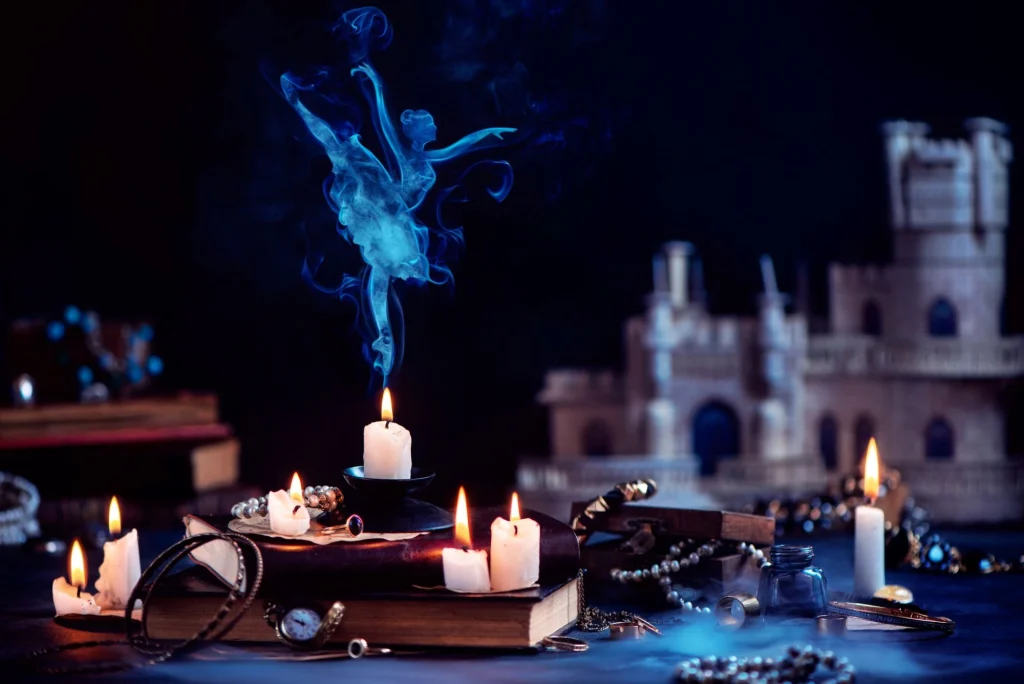
Today, Christmas is all about joy, peace, and hope. But if you lived in Victorian England, you would celebrate the holiday by gathering around the fire with your loved ones and swapping ghost stories. “Nothing satisfies us on Christmas Eve but to hear each other tell authentic anecdotes about specters,” British travel writer Jerome K. Jerome wrote in the introduction of his 1891 Christmas ghost story anthology. That explains why Charles Dickens blended the Christmas spirit with actual spirits in his 1843 novella A Christmas Carol!

Popular Articles About Christmas
Originally published December 17, 2024
Author(s):