A Complete Guide to Pet-Friendly Assisted Living Facilities

I love my cats, and I know I’m not alone in that sentiment. Pets bring so much joy to our lives. In fact, one recent survey revealed that pet owners may be happier than their furbaby-free counterparts. If you’re anything like me, you can’t imagine a life without your furry (or feathery) best friend. Older adults who want to age in place don’t have to worry about ever leaving their pets behind. But for other seniors, aging in place is a luxury they can’t afford. Some might have to move into nursing homes. Others will have to trade their family home for an assisted living facility. The seniors who fall into that last category might wonder what will happen to their fur babies. Will they have to put them up for adoption? Or give them to a friend and have only weekend visitation rights? Here’s the good news: there are pet-friendly assisted living facilities out there. The key is to find the perfect one for you! Here’s everything you need to know.
1. Types of Pets Allowed
According to U.S. News & World Report, many assisted living facilities welcome pets, with a few obvious exceptions. For example, Wellington Bay, a luxury retirement community near West Palm Beach, Florida, encourages residents to bring their cats, dogs, and smaller birds (no African Greys or macaws, please!). While they don’t impose weight restrictions on pets, they do prefer smaller animals that pose less of a risk to residents. In other words? A Pomeranian would be more of a welcome guest than a Great Dane. “Really, it’s just based on the animal’s temperament,” says Jay Mikosch, director of Wellington Bay. Wellington Bay is just one of the many pet-friendly assisted living facilities out there. Every facility will have its own set of rules and restrictions, so do your research and choose one that you know will welcome your little Fido with open arms!
2. Pet Care Responsibilities
Anyone who’s ever owned a pet knows this simple truth: they bring about a slew of responsibilities. Even goldfish have to be fed regularly and have their water changed! According to Senior Services of America, some pet-friendly assisted living facilities will do a pre-move-in screening to make sure you can take care of your pet. If you have a dog, you’ll have to walk it and clean up after it. While a lot of facilities offer services like dog walking and pet grooming, don’t just assume that you can pass off your responsibilities to staff members. Your address may change, but your duties as a pet owner will stay the same!
3. Pet-Friendly Amenities
Many pet-friendly facilities offer amenities for both humans and their four-legged friends. For example, The Villas of Holly Brook, a Florida-based senior living community, has a full-scale dog park, complete with doggie teeter totters, crawl tunnels, hoops, and more! Others might provide designated bathroom areas and pet grooming stations. Some might even offer fun, pet-based activities or highlight pets in the community newsletter. If pet-friendly amenities are important to you, check a community’s website or visit it in person to make sure it has some!
4. Pet Policies
Every facility has different rules, even those pertaining to pets. (Or should I say…purrtaining?) Monarch Communities has the following pet policies, which are standard at most assisted living facilities:
- Must provide documentation of up-to-date vaccinations.
- Pets must be spayed/neutered.
- Weight limit: 25 pounds at full maturity; only small dog breeds allowed at this time.
- Number of pets limited to one (1) per senior resident.
- Residents must assume total care of the pet; when residents cannot fulfill pet care duties, the Executive Director will help find the animal a new home.
- The pet must be used to social interactions with other humans and animals.
- Additional pet fees will be added to the resident’s expenses, unless the animal has ADA certification (this does not include emotional support animals).
As I mentioned in a previous paragraph, Wellington Bay bases its policies around an animal’s temperament. If you have a dog that’s sweet with people but aggressive to other dogs, it might not be allowed into a senior living facility. Likewise, other facilities ban exotic animals, like snakes or larger parrots. Always check (and double-check) the rules before you sign anything! Do your research and find a facility that has everything you’re looking for, down to the pet policies.
Preparing Your Pet for Assisted Living
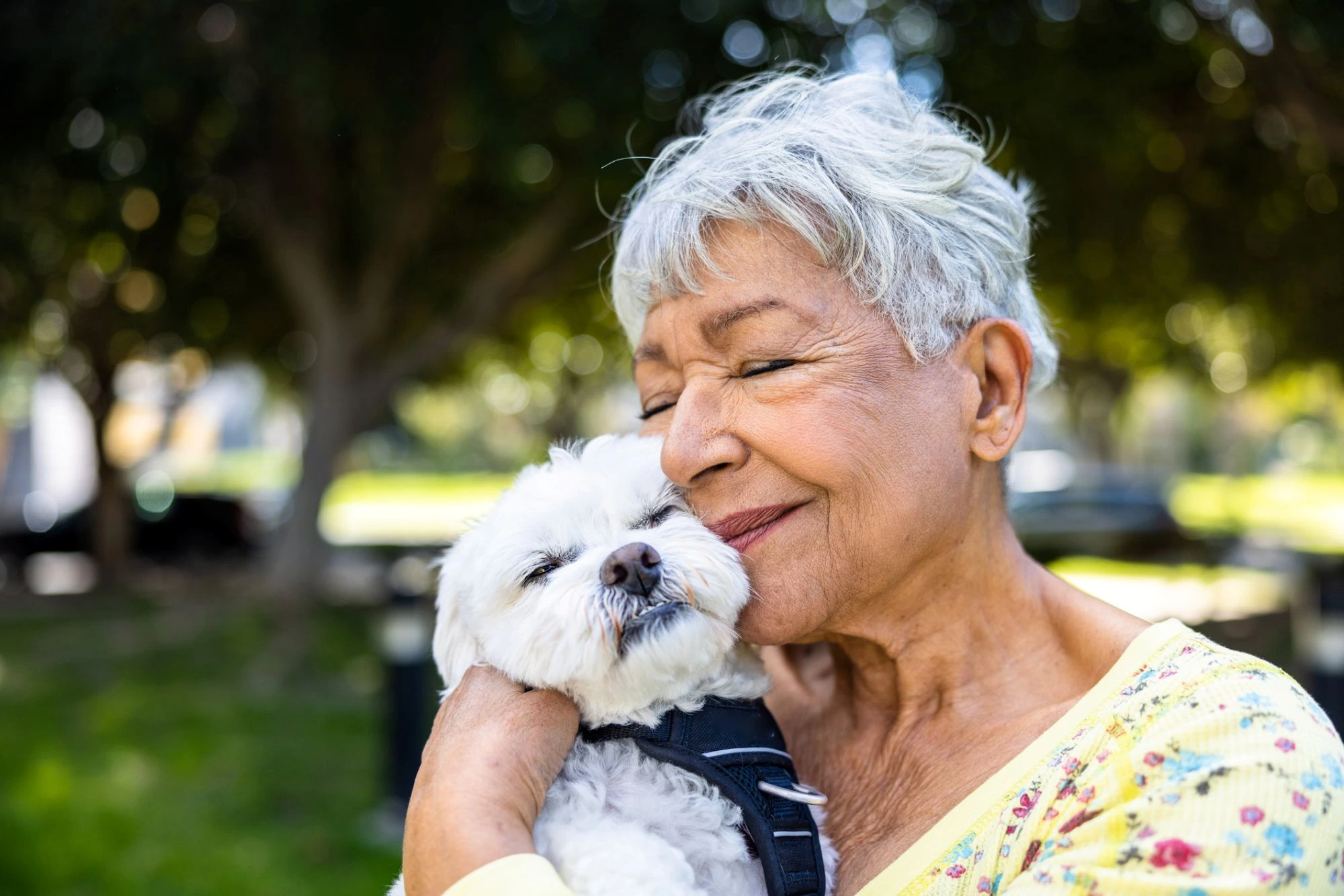
A move is hard on anyone, including your pets. The best way to make the process a little less stressful for both you and them? Do a little pre-planning, of course! Here are a few things to add to your to-do list before moving into an assisted living facility:
1. Take your pets to the vet.
As I stated above, many facilities require proof that your pets are healthy and up to date on all their vaccinations. So, call your local vet and schedule an appointment. Have them look over your best friend and give them a clean bill of health.
2. Visit the facility with your pet before you move.
Pets are smarter than most people give them credit for. When they change homes, they notice. Dogs might realize their daily walking path looks different. Cats might recognize that the air smells different. Even your small pets, like guinea pigs and rabbits, will probably sense that something has changed. Visit the facility with your pet before you move to help them get comfortable with their new surroundings. Walk your dog around the campus.
3. Start packing and decluttering as early as possible.
This tip comes from the folks over at The Heritage at Brentwood. They recommend that you start packing your things as soon as you can, so you don’t have to rush. That way, your pet can continue their normal routine uninterrupted for longer. Remember, dogs and cats get stressed, too! Also, make sure your dog is used to its crate. If your dog doesn’t know a crate from a biscuit, start crate training. Use lots of treats as rewards and tell your dog what a good boy (or girl) they are.
Health Benefits of Pet Ownership
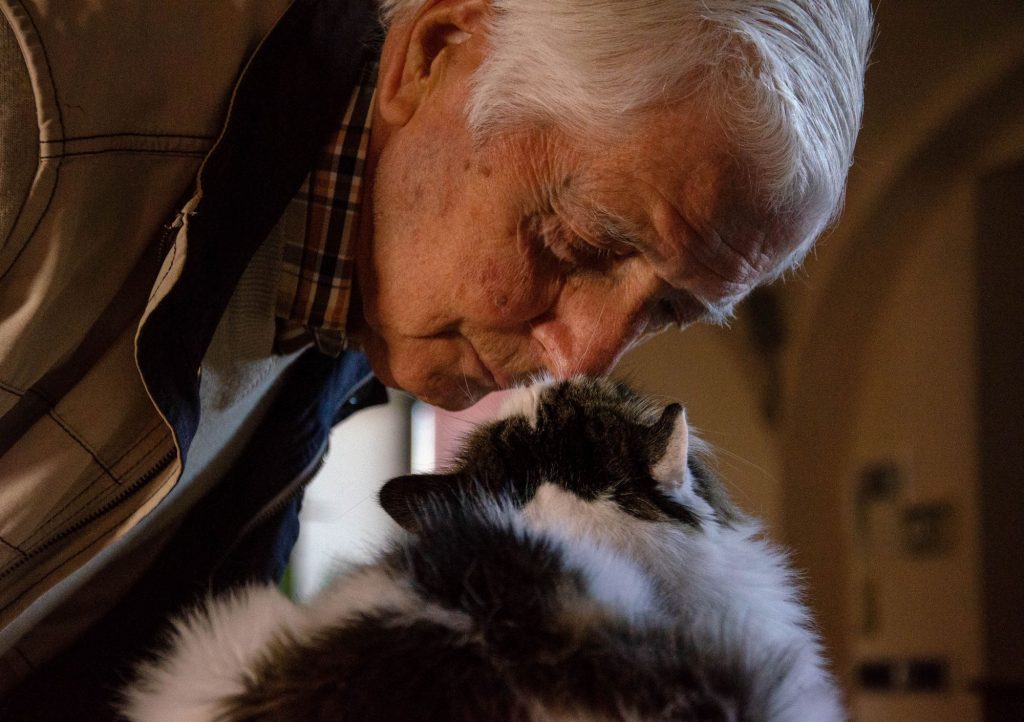
1. Pets can improve your mental health.
According to a 2023 article published by Psychiatry.com, pets can improve your mental health. “People recognize that there is something special about bonds between humans and their pets,” noted renowned APA President Rebecca Brendel, M.D., J.D. “The animals we bring into our lives and our families play many roles from non-judgmental companions that we love to key partners in reducing our stress and anxiety. Americans clearly recognize that our relationships with our pets can have noticeable benefits for our overall mental health.” In a related poll, 69% percent of participants reported that pets helped reduce their stress and anxiety!
2. Pets can ease your loneliness.
Did you know that 1 in 3 older adults experience loneliness? And while you can’t totally replace human interaction, pets can help ease your loneliness. There’s nothing quite like the click-click-click of paws on hardwood as your furry friend comes to meet you. So, if you feel lonely, you might want to look into adopting a furry friend or two. They don’t call dogs man’s best friend for no reason! (However, as a Cat Person, don’t discount their loyalty!)
3. They can help you stay socially connected.
Speaking of loneliness, social isolation is also a big issue among the elderly population, with over 24% of American seniors over the age of 65 considered such. Pets can help you make those oh-so-important social connections we all crave. For example, dogs give you a reason to get out of the house and into the world, a key ingredient to meeting potential friends. And while cats don’t need daily walks like dogs, they can still spark a connection or two…especially in the online realm. Consider joining an online community, like the r/cats Subreddit or TheCatSite. Don’t be afraid to share your precious fur baby with the world!
4. Pets can help you stay fit.
This next bit comes from the Pet Food Institute. Their research shows that dog owners are 50 percent more likely to meet recommended levels of physical activity than dogless people. The same article also states that pet owners were more likely to have lower blood pressure and hypertension. So, in other words, pets quite literally do the heart good!
5. They provide a much-needed sense of purpose.
So many seniors flounder after retirement. Some might have started to feel obsolete the moment their kids flew the coop. You might’ve briefly reclaimed your purpose after you became a grandparent. But now your grandkids are teenagers, and they seemingly need you less and less. Whether you found purpose in your job, your family, or even a hobby you can no longer pursue, there’s a pretty good chance you feel adrift. Purposeless, even. Fortunately, pets can restore your sense of purpose! Feeding, grooming, and walking your pup can remind you how important you are. They can even help you feel needed and, even more importantly, loved unconditionally. What could be more special than that?
Looking for more?
Click here to find assisted living near you.

Popular Articles About Assisted Living
Originally published July 08, 2025
Author(s):