Gift Basket Plants
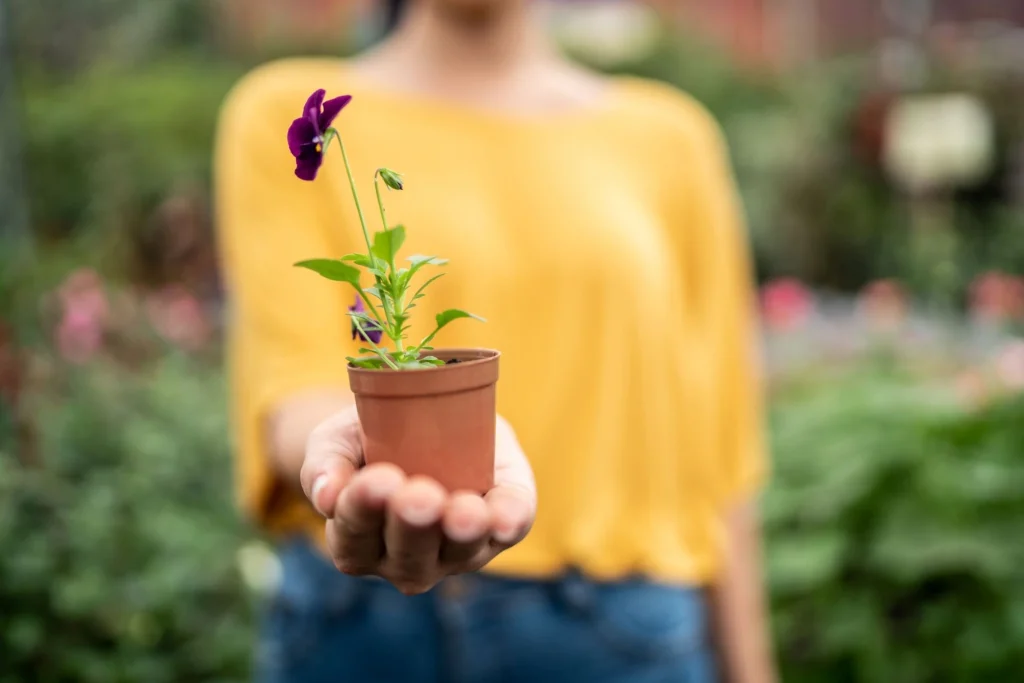
People like to give plants as gifts for birthdays, when a baby is born, or for funerals. Very often an entire basket of plants is given. Did you get a basket of plants for Christmas?
Usually, all of the plants in the basket are houseplants that need the same amount of sunlight, the same temperatures, and the same amount of water in the soil. They will probably like more humidity in the winter, but then, so do we.
Even though these are houseplants, they can’t stay in the close quarters of the basket for too long. The leaves in the middle of the basket will not get enough light and will begin turning yellow and then dying. The plants in the basket should be able to make it until spring when they will need to be planted in separate pots.
They may be house plants, but very often they are baby plants that will grow much larger. Let’s look at some commonly used gift basket plants.
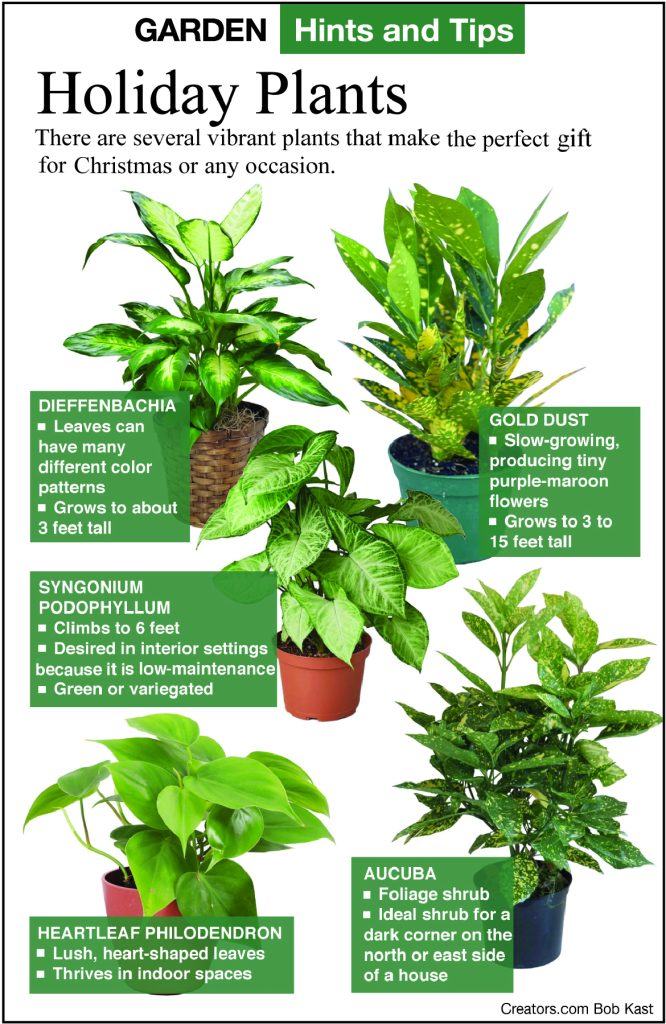
Dieffenbachia
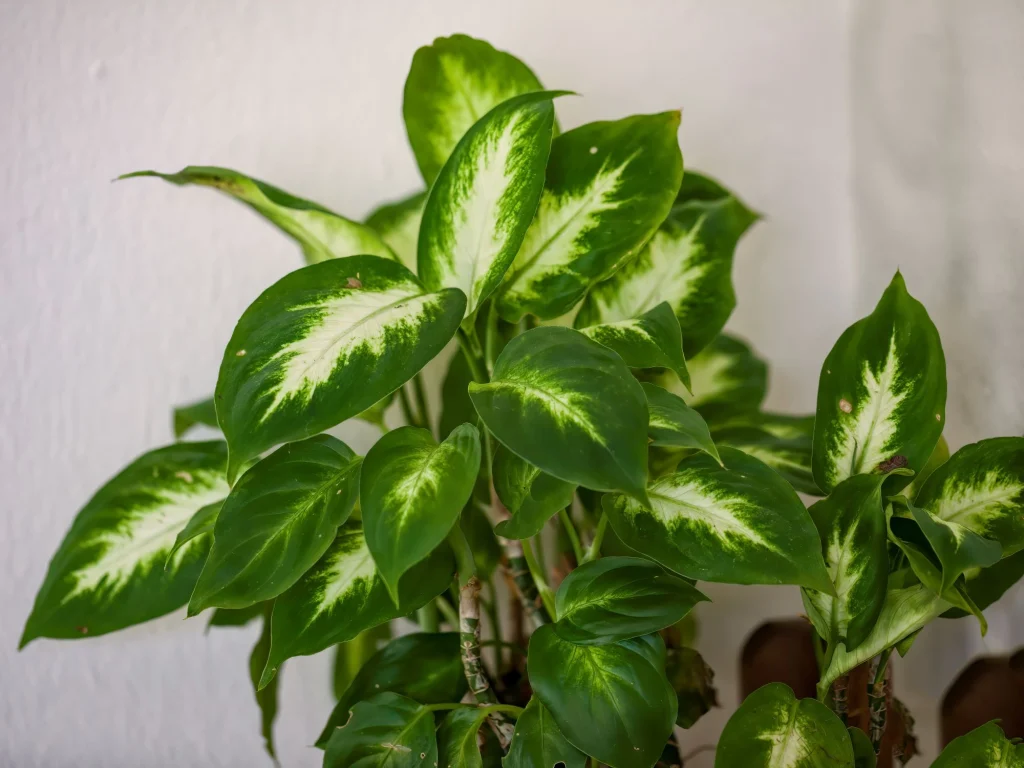
Dieffenbachia is both the common name and the genus of a plant sometimes called dumb cane. That name comes from the fact that the plant sap has calcium oxalate crystals that can cause the tongue and throat to swell if eaten. The crystals are found in other houseplants as well, including other plants used in baskets.
Dieffenbachia leaves can have many different color patterns, from mostly white or yellowish to mostly green. Some have spots and some have large blotches of color. The older varieties grew to over 10 feet tall, but newer varieties are generally less than 3 feet tall. It is native to Mexico to Argentina.
Heart Leaf Philodendron
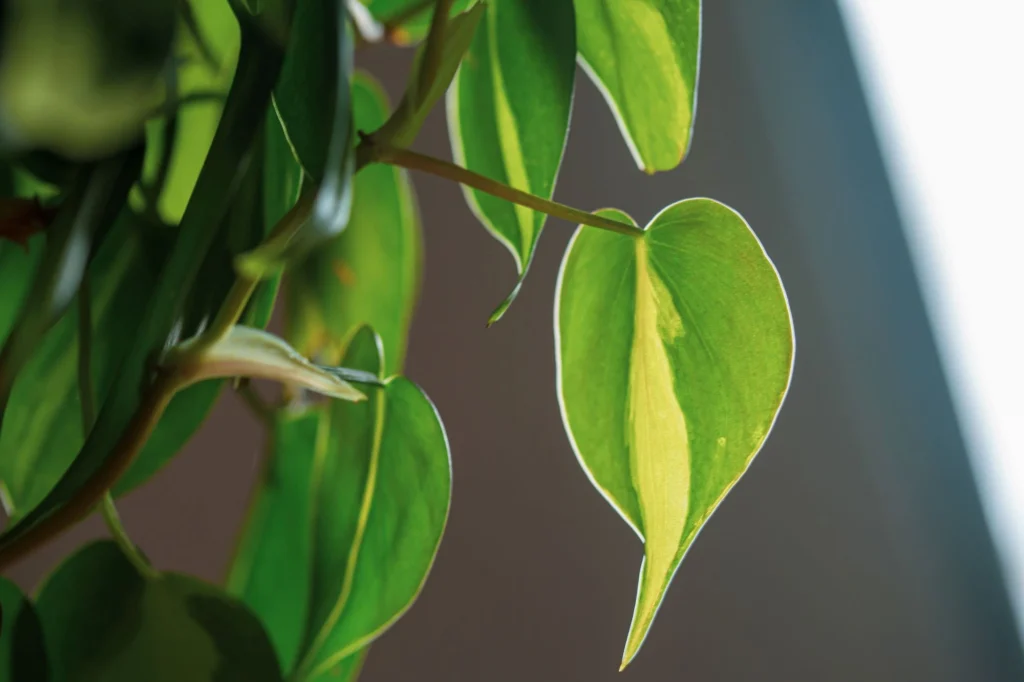
Heart leaf philodendron, or botanically Philodendron hederaceum, is used as a vine to hang over the edge of the basket. The botanical name means “tree-loving ivy-looking.” It is a vine native from Mexico to Brazil. Indoors, it will stay as an immature plant, growing to 6 feet or so. Outdoors in a warm climate, such as zones 11 or 12, the plant will grow to over 20 feet, and the mature plant can have leaves over a foot long. In many ways, it resembles the common pothos vine, but the philodendron has shiny leaves that are slightly wavy and have a longer slender heart tip. The variegation on the philodendron is often only on one side of a leaf, but the pothos variegation is more speckled all over.
The Neanthe Bella Palm
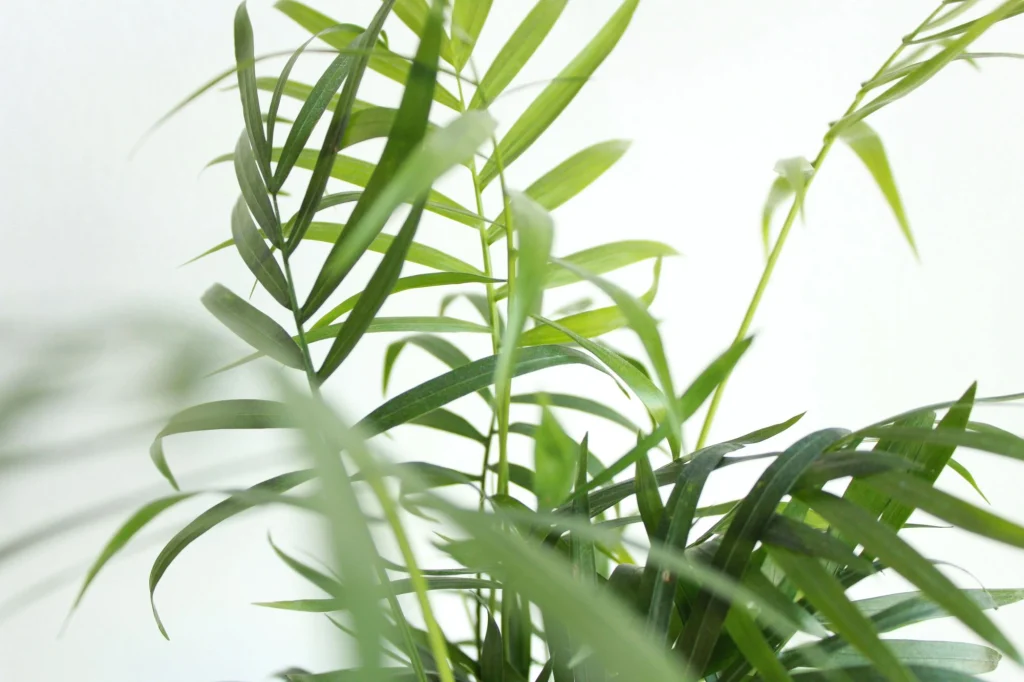
The Neanthe bella palm, Chamaedorea elegans, is also called the parlor palm. It is often sold when it is very small and can be used in a tabletop planter or terrarium. It will eventually grow to about 4 feet tall in a pot or 10 feet tall outdoors in a warm climate. It is native to Mexico and Guatemala. The leaves can be used in flower arrangements, and they can last for a month after harvest. It often produces small yellow flowers.
Arrowhead Vine
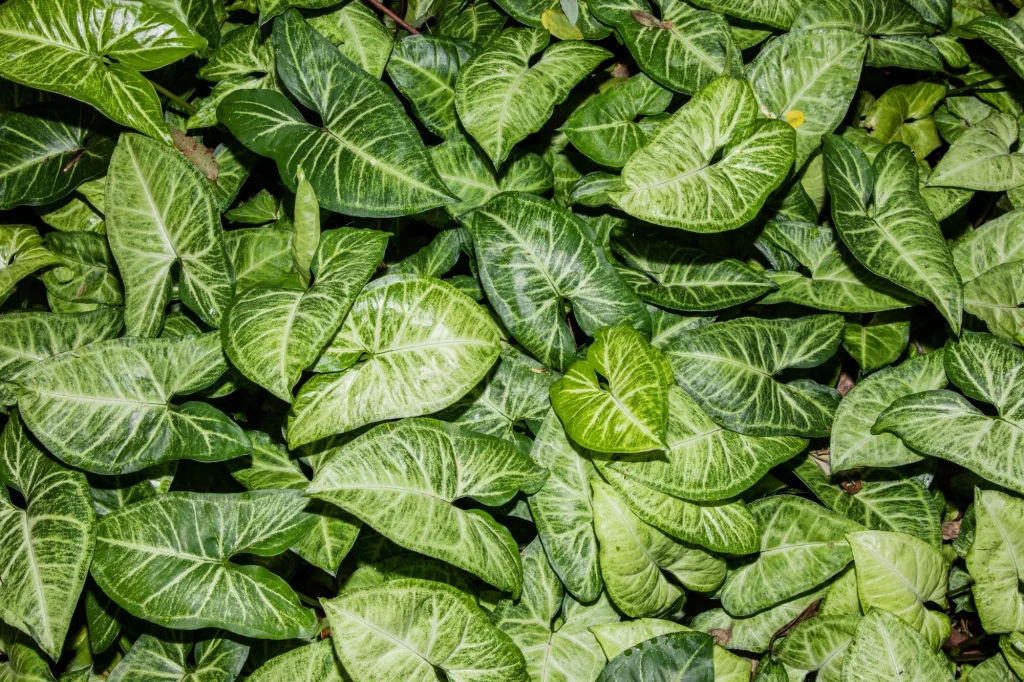
Next, we have the arrowhead vine, Syngonium podophyllum. It is native from Mexico to Ecuador. The young leaves may be heart-shaped, but older, larger leaves develop into the more arrowhead shape and finally, the mature leaves on an outdoor plant develop palmately compound leaves. Older varieties grew into longer vines, while newer varieties have been selected to grow a bushier shape.
Gold Dust Plant
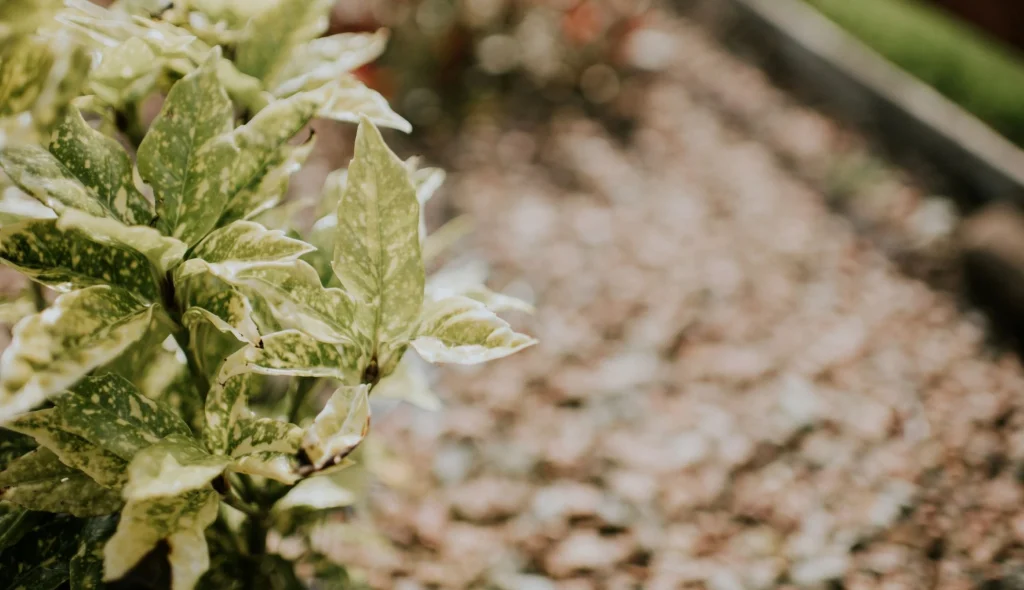
Gold dust plant is a variegated variety of Aucuba japonica; it is also called spotted laurel, Japanese laurel and Japanese aucuba. It is a shrub 3 to 15 feet tall if grown outdoors. It is native to forested areas in moist valleys, near streams in China, Korea and Japan, but it is a common shrub in the Southern United States.
Gold dust plant is dioecious, meaning there are separate male and female plants. The flowers are small and not showy. The gold dust variety is female, but without a male nearby, there won’t be berries.
The variegation is caused by Aucuba bacilliform, a virus that in this case doesn’t kill the plant. Other viruses in the same virus family do kill plants.
There are several other varieties of Aucuba that have different leaf shapes and may or may not have the yellow variegation. Some varieties only grow to 6 feet tall, which is about the normal size indoors. It can be grown outdoors in the shade in horticulture zones 6 through 10.
If you get a gift basket of plants, you should enjoy it for a few weeks, but then you can start thinking about moving the plants into separate pots, so the plants can be enjoyed for a lot longer.
COPYRIGHT 2024 JEFF RUGG
DISTRIBUTED BY CREATORS.COM
More Gardening Resources

Popular Articles About A Greener View
Originally published December 30, 2024
Author(s):