The Importance of Maintaining Daily Routines for People with Dementia

Too often, as care partners, we step in and take over tasks for the people we support. It might be because the task frustrates them, they make a mistake, or it takes them much longer than it would if we just did it ourselves. While our intentions are good – wanting to make their lives (and ours) easier – in reality, we may unintentionally cause more harm than good.
A recent study published in the Lancet Healthy Longevity explored the benefits of a novel training program that allowed the person with dementia to set and implement daily goals that were important to them, supported as needed by the care partner. Goals included doing simple but meaningful activities, like household chores, dressing independently, or making a cup of tea. The study found that people who engaged in these activities that were important to them, on their own, stayed independent longer. Many of these ‘goals’ are what would be considered part of a person’s daily routine. If, as care partners, we make it one of our goals to help the person we support maintain their pre-diagnosis routine, we are helping both them and ourselves.
Use the code RESOURCE for a 15% discount on an annual Zinnia TV subscription!
Creative Supports Help a Person Keep Their Routine

I think back to the time when my mom was supporting my stepdad, Ken, who had Vascular Dementia. Ken’s morning routine included putting on the coffee. He loved that when Mom got out of bed, there was a nice hot cup of coffee waiting for her.
I received a frantic call early one morning from Mom. Instead of water, Ken had poured the cream right into the coffee maker, and it was probably ruined.
That was it! Ken was done.
No more making the coffee.
When Mom had calmed down, I asked, “What do you think it would feel like for Ken to have his barista job taken away?”
Like all people with dementia, Ken had already lost so much.
Driving – gone.
Barbecuing steaks – gone.
The poor guy wasn’t even allowed to pour Mom’s evening glass of wine anymore, despite the fact that the stain in the living room carpet did eventually come out.
“He’d be sad,” Mom said.
I explained that taking a ‘job’ away from a person with dementia damages their confidence and sense of self-worth. And, as was found in the Lancet study, the longer people are encouraged to do things for themselves, the longer they hang onto those skills.
I asked Mom to think about some supports she could put in place that would help Ken be successful in making the coffee.
“I could put a little jug of water right next to the coffee machine,” she said.
We agreed that she could even put a label on it – Water for Coffee Machine.
We talked about posting an easy-to-follow list of steps next to the coffee machine. Ken could even help come up with the items on the list. We agreed that if those things stopped working, Mom could join Ken in the morning at the coffee machine.
“You could just kind of show up and ask if he could show you how to make coffee,” I suggested. Then, she could gently coach as needed.
As care partners, it’s our job to come up with adaptations that support success and to recognize that it’s much better to do something with a person than to do it for them.
Break Routine Tasks into Smaller Pieces

Brushing teeth, showering, getting dressed – all are parts of the daily routine that we want to encourage a person to complete for as long as possible on their own. One of the ways we can help is by recognizing that while each of these sounds simple, they’re composed of lots of steps. A person with dementia may not know where to start. Or they might get lost somewhere in the middle.
The way we can help is to break up the task into smaller pieces. There may come a time when saying, ‘How about getting dressed,’ doesn’t work any longer. Instead, you might start with, ‘How about choosing what to wear today?’ When the selections are made, follow up with, ‘Those look great! How about putting on the clothes now?’
Over time, steps might be smaller and more specific: ‘What shirt would you like to wear today?’ or, ‘Would you like to wear the green shirt or the blue one?’
If we consider where in the flow a person might get stuck, or we pay attention to where they DO get stuck, then we can make adjustments. If choosing a shirt is difficult because there are so many options, for instance, removing most of the clothes from the closet or drawer might make it easier.
Model the Activity Rather Than Explain It
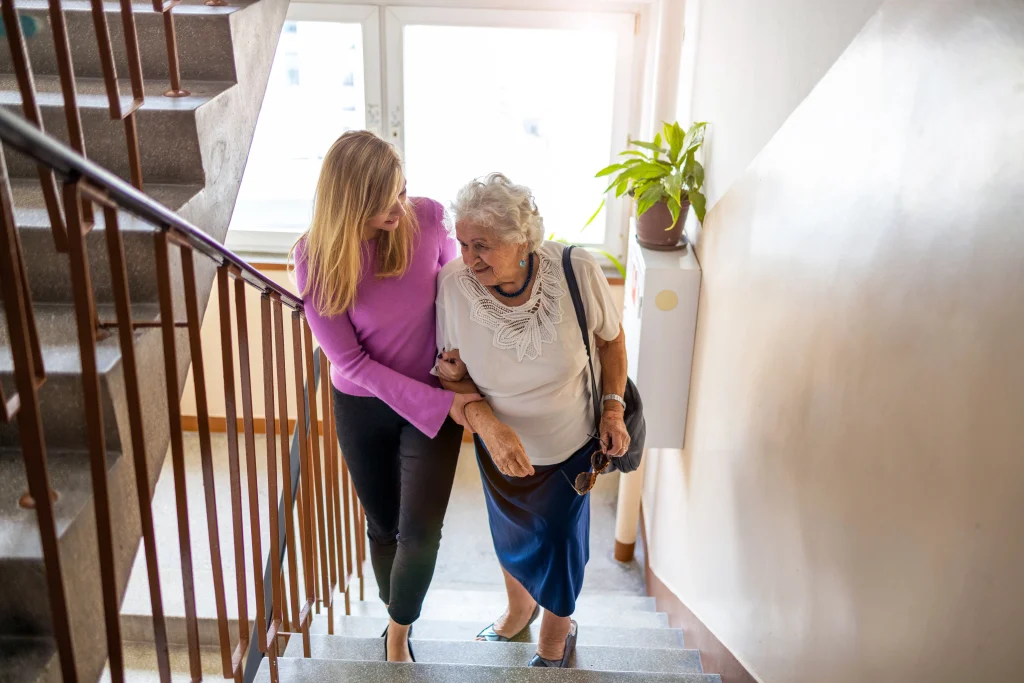
Nobody likes to be told what to do. That’s as true for a person with dementia as it is for anyone else. Inviting a person to do things with you gives you an opportunity to wordlessly explain the steps they might have forgotten.
‘Let’s get dressed’ creates an opportunity to model the activity, perhaps describing steps as you do them.
‘I’m going to wear this blue shirt today. What shirt are you going to wear?’
Another excellent way to model activities is to sit together and watch videos from the ZinniaTV Activity of Daily Living. Watching a video like Let’s Get Dressed, Get Ready to Shower, or Use the Toilet can promote independence by both reminding a person of the steps involved in daily activities and generating interest in engaging in that activity.
Research has shown that watching these videos on a regular basis helps reduce stress and anxiety around performing these tasks.

And videos in the Zinnia care partner Education channel, like Successful Toileting, for example, explain how care partners strike a delicate balance–respecting independence while still providing necessary assistance.

As care partners, it is important that we pay attention to what a person is still able to do rather than focusing on skills they have lost. Encourage them to use those skills whenever possible, making sure they do not feel rushed. And always show appreciation for a job well done!
Remember, every effort you make toward preserving routine is an act of care and love. Small victories, like a successfully brewed pot of coffee or choosing an outfit, are steps toward a better day for both of you. Keep going – you’re making an incredible difference!
Use the code RESOURCE for a 15% discount on an annual Zinnia TV subscription!
Photo Credits: Halfpoint Images, Getty Images | Shutterstock

Popular Articles About Caregiving, and Alzheimer's and Dementia
Originally published March 18, 2025
Author(s):