Find Senior Apartments and 55+ Apartments for Retirees Near Me
Jump to the list of senior apartments near you.

Are you ready to embrace the next chapter of your life and enjoy your golden years to the fullest? You're not alone! According to the U.S. Census Bureau, by 2030, one in five Americans will be over the age of 65. This growing demographic is opting for senior apartment living as an attractive and cost-effective option.
It's not just about convenience and affordability; it's about creating a vibrant and fulfilling lifestyle! Let's explore the various types of senior apartments, their costs, how to pay for them, and of course, where to find them!
Who Lives in Senior Apartments?

Senior apartments are great for retirees who want to downsize but have a strong social life. Apartment living is appealing to those who dislike yard work or home maintenance. It's also a great option for retired travelers who just want some peace of mind while away from home. Residents save money with lower expenses because they often include utilities and don't require property taxes.
Here's who apartment living is perfect for:
- Retirees who have downsized to simplify their lifestyle
- Travel enthusiasts seeking worry-free adventures
- Retirees desiring a low-maintenance living environment
- Divorced or widowed seniors starting fresh
- Relocators who want to be closer to loved ones
- Cost-conscious senior adults seeking affordable living options
- Retirees craving a sense of community
- Seniors prioritizing safety and security
Can Children and Spouses Live in Senior Apartments?
The rules regarding children and spouses living in senior apartments may vary based on the specific community's age requirements. Senior apartments are usually age-restricted. This means that only residents over 55 may live there (with some exceptions). To lawfully rent or sell to only senior citizens, the apartment building must adhere to the Fair Housing Act's “Housing for Older Persons” Exemptions.
- Spouses: In a 55+ senior housing community, if one household member meets the minimum age requirement (typically 55 years or older), spouses should be eligible. However, in 62+ senior apartments, the age policy is strictly enforced, allowing only residents aged 62 and above.
- Children: While children, including grandchildren, cannot permanently reside in senior apartments, they are usually welcome to visit. Rules regarding short-term visits may differ, so it's advisable to confirm with the apartment complex. Some senior apartment communities even provide small playgrounds or host kid-oriented events for enjoyable grandchild visits.
Types of Senior Apartments
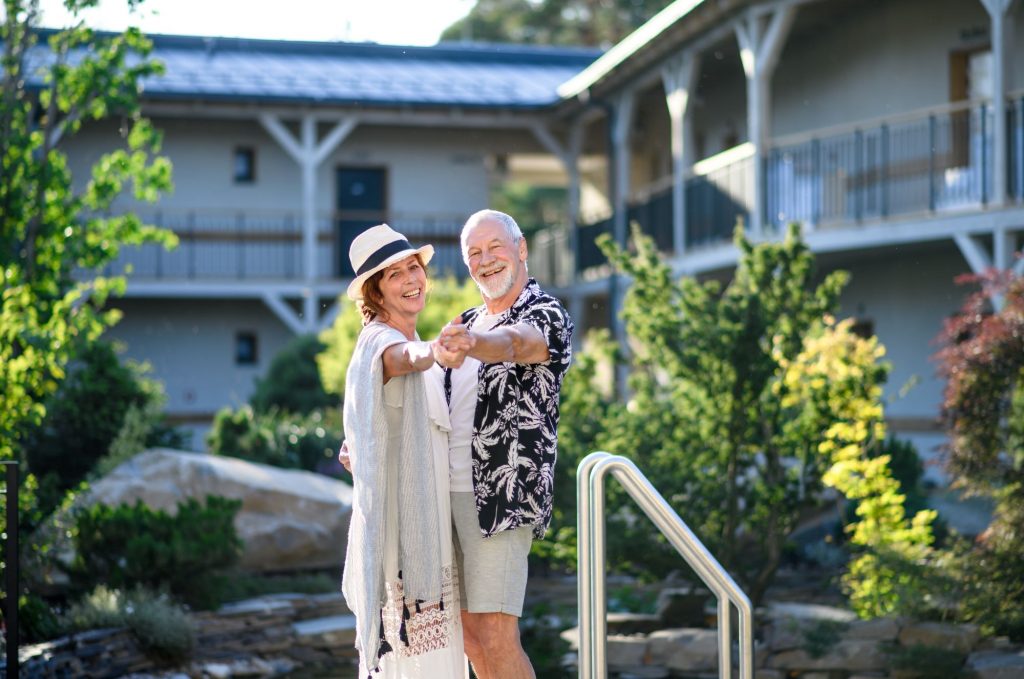
There are generally three types of senior living apartments: affordable, market rate, and luxury.
Affordable Senior Apartments
Retirees with low income may be eligible for cheap senior living apartments provided by government housing programs. These apartments are cheaper than usual. The eligibility to rent them depends on factors such as income, family size, and the average income in the area. Keep in mind that services or amenities in low-income senior apartments may be more limited.
Market Rate Senior Apartments
Market-rate senior apartments do not have income limits. Pricing is competitive and based on comparable housing options in the surrounding area. These apartments often come with amenities like community dining, housekeeping, and even transportation services.
Luxury Senior Apartments
Luxury apartments are generally larger, offering up to 2,000 square feet of living space, and boast a wide range of upscale amenities and community activities for their residents. Many luxury apartments are situated within gated communities. The cost of living in these apartments can be quite high, with entrance fees alone often reaching six figures.
Senior Apartment Amenities and Other Features

Senior apartments offer benefits like living near people of similar age and enjoying amenities. Though each apartment building is different, common features include:
- Swimming Pools - Stay active and cool off during warm summer months with access to on-site swimming pools.
- Laundry Facilities - Conveniently located laundry facilities within the apartment building save you the hassle of trips to the laundromat.
- Fitness Centers -Keep up with your exercise routine and stay fit with on-site fitness centers.
- Common Areas - Enjoy socializing and connecting with fellow residents in common areas.
- Security - Most senior apartments prioritize resident safety and provide security measures such as controlled access entry systems, surveillance cameras, and attentive staff.
- Salons and Barber Shops - Pamper yourself without leaving the premises by taking advantage of on-site salons and barber shops.
- Art Rooms - Unleash your creativity in designated art rooms.
- Libraries - Feed your love for reading with well-stocked libraries offering a wide selection of books, magazines, and newspapers.
- Housekeeping - Some senior apartments offer housekeeping services to help you maintain a clean and tidy living environment.
- Game Rooms - Engage in friendly competition and enjoy playing games like billiards, cards, or board games in dedicated game rooms.
- Planned Activities - Stay entertained and connected through a variety of planned activities organized by the community. These can include movie nights, educational workshops, arts and crafts classes, and more.
- Resident Outings - Experience new adventures and make lasting memories with organized outings to local attractions, events, or scenic spots.
- Personal Transportation - Many senior apartments offer transportation services for residents, making it easier to attend medical appointments, go shopping, or participate in community activities.
- Proximity to Medical Facilities and Shopping Areas - Senior apartments are often strategically located near medical facilities and shopping areas, providing convenience and easy access to essential services and amenities.
Buildings have various features that promote safety and accessibility. These features include handrails, elevators, ramps, support bars, shower chairs, and emergency call systems.
How Much Do Senior Apartments Cost?

On average, senior apartment rental prices across the US range from $850 to $7,500 per month. The overall cost is influenced by factors such as location, amenities, and apartment size.
- Affordable - The Department of Housing and Urban Development (HUD) defines affordable housing as a residence that “a household can obtain for 30 percent or less of its income.” Affordable senior apartments are just this - rent and utilities are subsidized as a less expensive option for seniors living on fixed incomes.
- Market Rate - Apartments available for market rate are rented without any subsidies and offer competitive prices and a variety of amenities. Rates are usually slightly lower than all-age apartments.
- Luxury - Luxury apartments are those that offer larger units, more upscale amenities, and are typically higher in price. Complexes categorized as luxury will often be located near cultural activities.
Read More About Senior Apartments

The Rising Popularity of Senior Living Apartment Communities

10 Most Important Considerations When Renting a Senior Apartment

How to Find Affordable Housing for Seniors
Suggest a Senior Apartment Listing
Do you know of any Senior Apartments that are not in our database and should be? If so, please add a listing.
Add a Senior Apartment ListingFind Senior Apartments Near Me:
- Pennsylvania
- Puerto Rico
- Massachusetts
- Rhode Island
- New Hampshire
- Maine
- Vermont
- Connecticut
- New Jersey
- New York
- California
- Florida
- Delaware
- District of Columbia
- Virginia
- Maryland
- West Virginia
- North Carolina
- South Carolina
- Georgia
- Alabama
- Tennessee
- Mississippi
- Kentucky
- Ohio
- Indiana
- Michigan
- Iowa
- Wisconsin
- Minnesota
- South Dakota
- North Dakota
- Montana
- Illinois
- Missouri
- Kansas
- Nebraska
- Colorado
- Louisiana
- Arkansas
- Oklahoma
- Texas
- Wyoming
- Idaho
- Utah
- Arizona
- New Mexico
- Nevada
- Hawaii
- Oregon
- Washington