10 Ways to Cut Your Grocery Bill In HALF
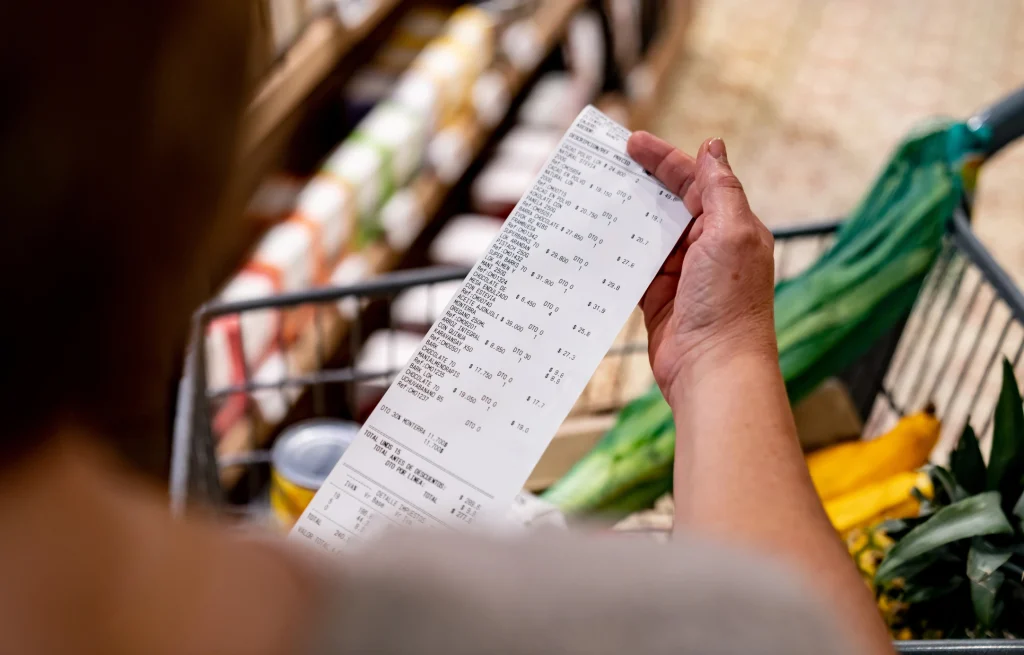
Is your monthly grocery spending eating up a big portion of your income? You’re not alone. Figures from the U.S. Department of Agriculture show that as of March 2024, on average, a family of four spends $1,341 per month on groceries to be eaten at home. Here, let me do the math: That’s $16,092 annually! And that doesn’t take into consideration the amount the typical household is spending on eating out.
Want to cut your grocery costs by, oh, let’s say HALF? You can if you are determined to become a smart shopper, employing every trick and tip in the book. You can – without sacrificing your family’s health and joy of eating great food – while keeping $8,000 or so in your pocket over the coming year.
1. Skip the Convenience Markups
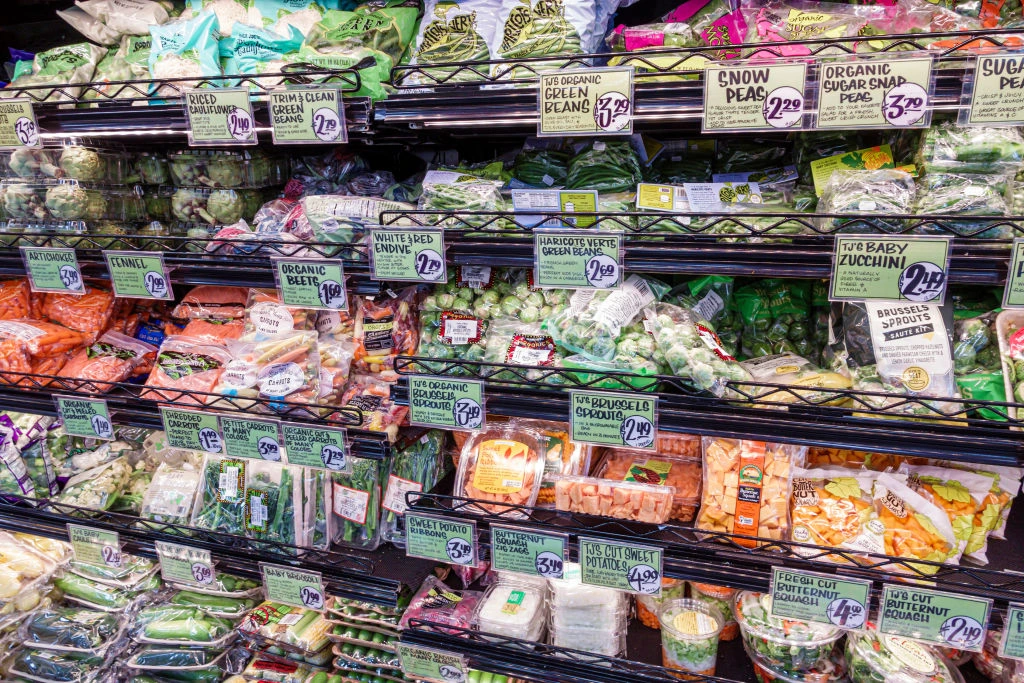
Yes, those precut bags of vegetables and single-serving oatmeal packets are super convenient – but they’re also budget busters. Consumer Reports points out that precut veggies come with jaw-dropping markups: Precut onions cost 392% more per pound than whole onions, and precut green beans have a 192% markup. The solution? Roll up your sleeves and do your own chopping, shredding and grating. You’ll save a bundle and maybe even burn a calorie or two. Do your own chopping, shredding, grating, and measuring, and you will save a bunch.
2. Stop Wasting Food (and Money)
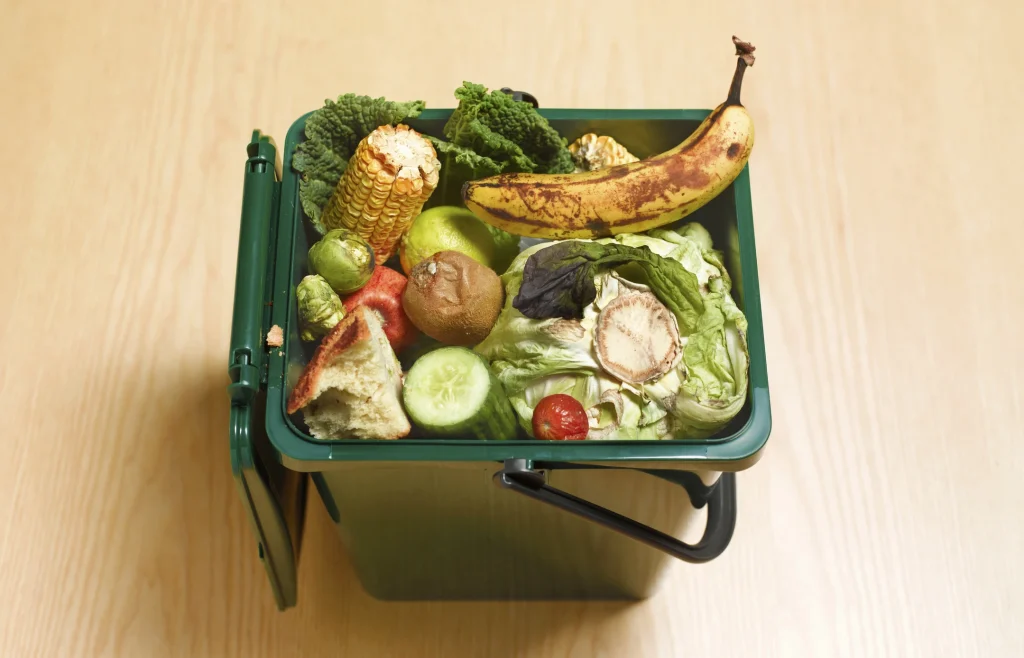
Be honest – how much produce ends up wilting in your fridge? A squishy cucumber here, a moldy berry there – it adds up fast. The Natural Resources Defense Council estimates that the average household tosses 40% of the food they buy, equating to an annual loss of thousands of dollars for a family of four. Buy only what you can realistically use, and start keeping tabs on what’s getting tossed. Your wallet will thank you.
3. Refuse to Pay Full Price

Here’s my mantra: Never pay full price. Ever. If it’s not on sale this week, wait it out – it will be soon. Get creative with your meals and plan around what’s discounted. When pantry staples or freezer-friendly items go on sale, stock up. Just make sure you have the space to store them!
4. Master Unit Pricing

Comparing prices gets a lot easier when you know to look at unit pricing – that’s the cost per ounce, pound or piece. It’s right there on the shelf tag, so bring your reading glasses if you need to. Once you start paying attention, you’ll see how often bulk purchases or generics win the price war.
5. Choose Recipes Wisely

Instead of building your weekly menu based on a Pinterest craving, start with what you already have and what’s on sale. It’s amazing how far you can stretch your budget with a little creative meal planning.
6. Stick to Your List

Make a shopping list before you leave the house, and don’t let your eyes wander once you’re in the store. Those unplanned purchases add up quickly – research from the University of Pennsylvania suggests that 60%-70% of supermarket transactions are impulse buys. That’s a big chunk of change you don’t need to spend.
7. Go Organic Where It Counts

Save your organic dollars for foods more likely to harbor pesticide residues, like soft-skinned fruits, meat, milk, and chicken. Check out the Environmental Working Group’s “Dirty Dozen” and “Clean Fifteen” lists at www.foodnews.org for guidance. Spoiler alert: Organic cookies are not a wise option.
8. Break Up with Brands

We all have our brand loyalties, but it’s time to let most of them go. Store brands and generics are often just as good – sometimes identical – to their name-brand counterparts. Don’t like it? Most stores will happily refund your money if you’re not satisfied.
9. Be a Coupon Ninja
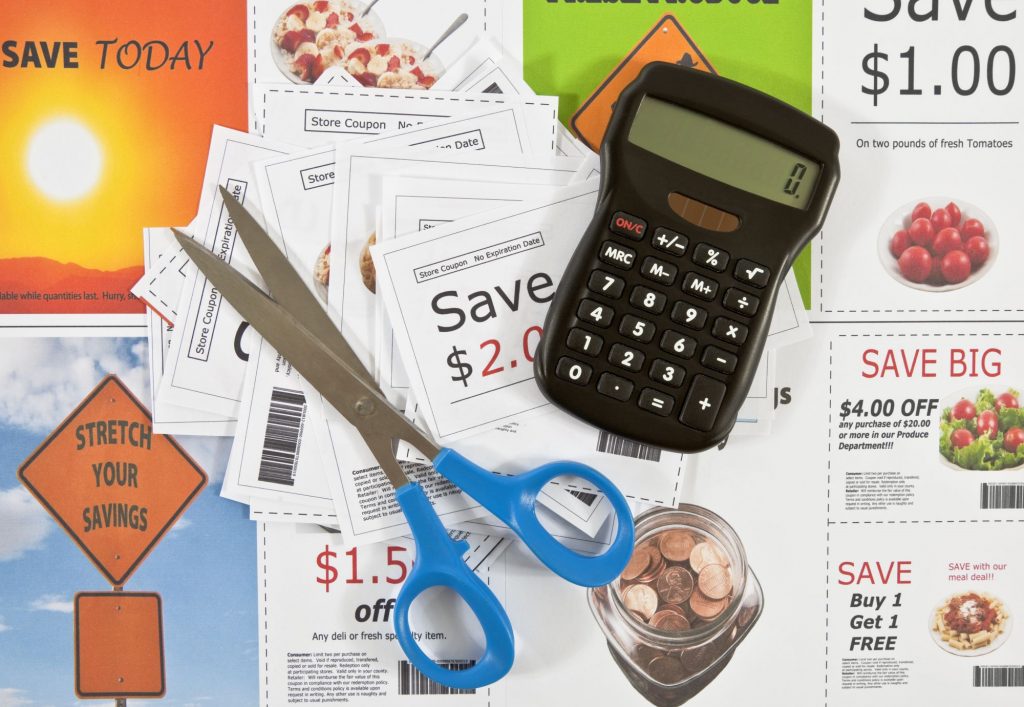
Digital or paper coupons can be great, but read the fine print. Make sure you’re grabbing the right item and size, and watching those expiration dates. It’s frustrating to grab the wrong thing and miss out on the savings.
10. Keep Your Eyes Open

Markdowns, buy-one-get-one-free deals or specials can be great – but only if you double-check. Ask a store employee to verify prices to make sure your coupon applies or if something seems unclear. Don’t let sneaky tactics trip you up. You’re smarter than the grocery store’s gimmicks.
With these strategies in your arsenal, you’re well on your way to a leaner, meaner grocery bill. And who knows – you might even have some fun outsmarting the system while you’re at it. Now, go forth and conquer those aisles!
Mary invites you to visit her at EverydayCheapskate.com, where this column is archived complete with links and resources for all recommended products and services. Mary invites questions and comments at https://www.everydaycheapskate.com/contact/, “Ask Mary.” This column will answer questions of general interest, but letters cannot be answered individually. Mary Hunt is the founder of EverydayCheapskate.com, a frugal living blog, and the author of the book “Debt-Proof Living.”
COPYRIGHT 2024 CREATORS.COM

Popular Articles About Personal Finance
Originally published December 09, 2024
Author(s):