Heart-Healthy Coffee

Here’s happy news for coffee drinkers: Up to 3 cups a day may be beneficial for your heart. But there’s a catch – if you’re adding sugar and cream, coffee’s benefits may be canceled out.
A recent study on middle-aged coffee drinkers without existing heart issues found that drinking up to 3 cups per day was associated with a lower risk for stroke or death over the next decade, along with better heart structure and function. Researchers at the Heart and Vascular Centre, Semmelweis University, Budapest, Hungary, looked at a large, observational study. The researchers examined data from the UK Biobank, which recruited 500,000 people ages 40 to 69 from across the United Kingdom. The average age was 56, and 56% were women.
Here’s the bottom line – regular coffee consumption is safe, as even high daily intake was not associated with adverse cardiovascular outcomes and all-cause mortality after a follow-up of 10 to 15 years.

I admit I love a good cup of coffee in the morning to start my day. If you’re like me and drop liquid creamer into your cup, try to wean yourself off the creamer. Start measuring how much creamer you use, try using a little less, and eventually you’ll find you may prefer the bolder taste of your coffee.
In this study, most of the coffee drinkers (55%) drank instant coffee, followed by filtered/ground (23%), decaffeinated (20%) or other types (2%). The risk for stroke or heart failure didn’t significantly differ for different types of coffee drinkers.
What about drinking more than 3 cups a day? Researchers found heavy coffee drinkers also had more favorable cardiac findings and similar rates of stroke compared with nondrinkers. Additional benefit wasn’t seen from drinking more than 3 cups.
Just what is there about coffee that’s beneficial when coffee and caffeine are often considered to be bad for the heart because people associate them with palpitations and high blood pressure?
Coffee is chock-full of substances that may help guard against conditions like dementia and heart disease. Coffee contains antioxidants and other active substances that may reduce internal inflammation and protect against disease.
So, skip the mocha or the latte. Enjoy your coffee in moderation as part of an overall heart-healthy dietary pattern with plenty of fruits and vegetables, whole grains, lean protein, and low-fat dairy products that is also low in sodium, saturated fat, and added sugars.

Q and A
Q: What is a refined grain?
A: Refining grain strips away the fibrous bran and nutrient-rich germ, leaving only the starchy endosperm. Without the fiber, the remaining carbohydrates are rapidly digested and absorbed, which can cause spikes in blood sugar. White flour and the many products made from it, including white bread, desserts, pastries, many cereals and crackers, white rice, and rice flour are examples of refined grain foods. Whole grains include barley, brown rice, buckwheat, bulgur, farro, freekeh, oats, quinoa, spelt, wheatberries and minimally processed products made from these and other grains.
Recipe
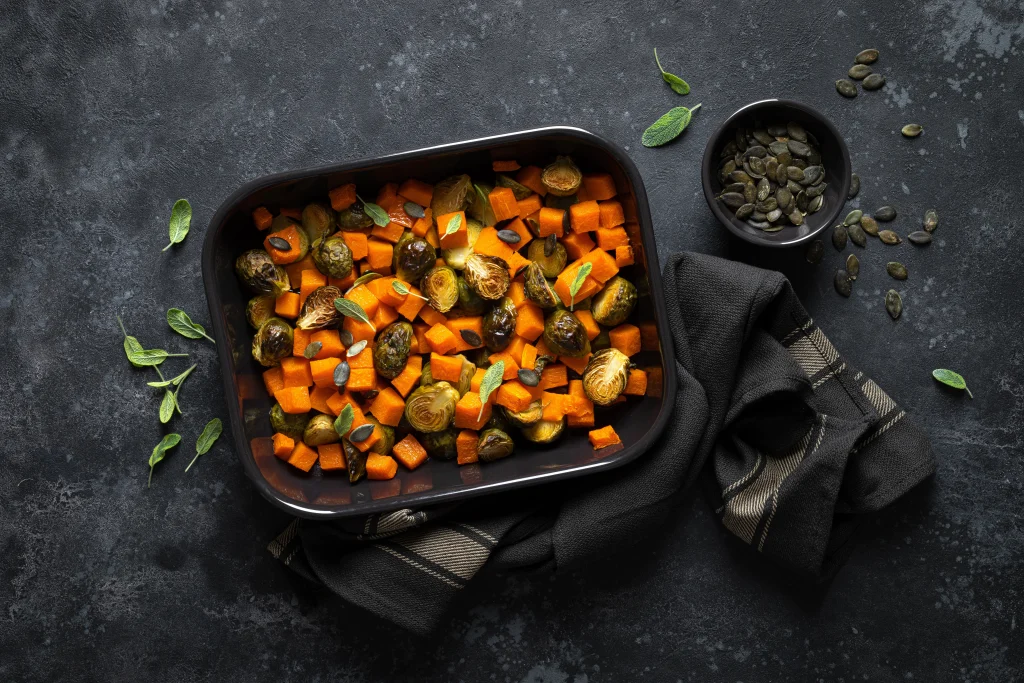
Most of us love seasonal foods. Squash is abundant now as fall arrives – butternut, spaghetti, crookneck. If you haven’t tried them for a while, don’t wait for Thanksgiving. Roasted squash is packed with flavor and is an amazing source of vitamins A and C, iron, and calcium. This recipe for roasted Brussels sprouts, butternut squash and dried cranberries is from Hy-Vee.
Roasted Brussel Sprouts, Butternut Squash, and Dried Cranberries
Servings: 4
1 pound butternut squash, peeled and cut into 3/4-inch chunks
1 pound Brussels sprouts, trimmed and halved
2 tablespoons plus 1 teaspoon extra-virgin olive oil, divided
1/2 teaspoon kosher sea salt
Black pepper to taste
1/4 cup dried cranberries
BALSAMIC VINAIGRETTE
2 tablespoons extra-virgin olive oil
1 tablespoon balsamic vinegar
1/4 teaspoon honey
1/4 teaspoon Dijon mustard
Salt and pepper to taste
Preheat oven to 450 F. Place squash chunks and Brussels sprouts in bowl. Drizzle with 2 tablespoons olive oil, salt and pepper; gently toss well to combine. Spread vegetables out evenly onto baking sheet. Roast for 20 to 30 minutes, tossing gently once or twice throughout cooking, until caramelized. Sprinkle dried cranberries onto baking sheet during last 5 minutes of roasting. Remove from oven. Toss vegetables with remaining teaspoon of olive oil and allow to cool slightly while vinaigrette is prepared. In a small bowl, whisk together olive oil, balsamic vinegar, honey, mustard, salt and pepper. Place roasted vegetables to large bowl. Pour vinaigrette over and gently toss. Serves 4.
Per serving: 240 calories; 5 grams protein; 30 grams carbohydrate; 14 grams fat (2 grams saturated); 8 grams fiber; 11 grams sugars (1 gram added); 280 milligrams sodium.
COPYRIGHT 2024 CREATORS.COM, CHARLYN FARGO, NUTRITION NEWS

Popular Articles About Heart Health, and Nutrition
Originally published September 13, 2024
Author(s):