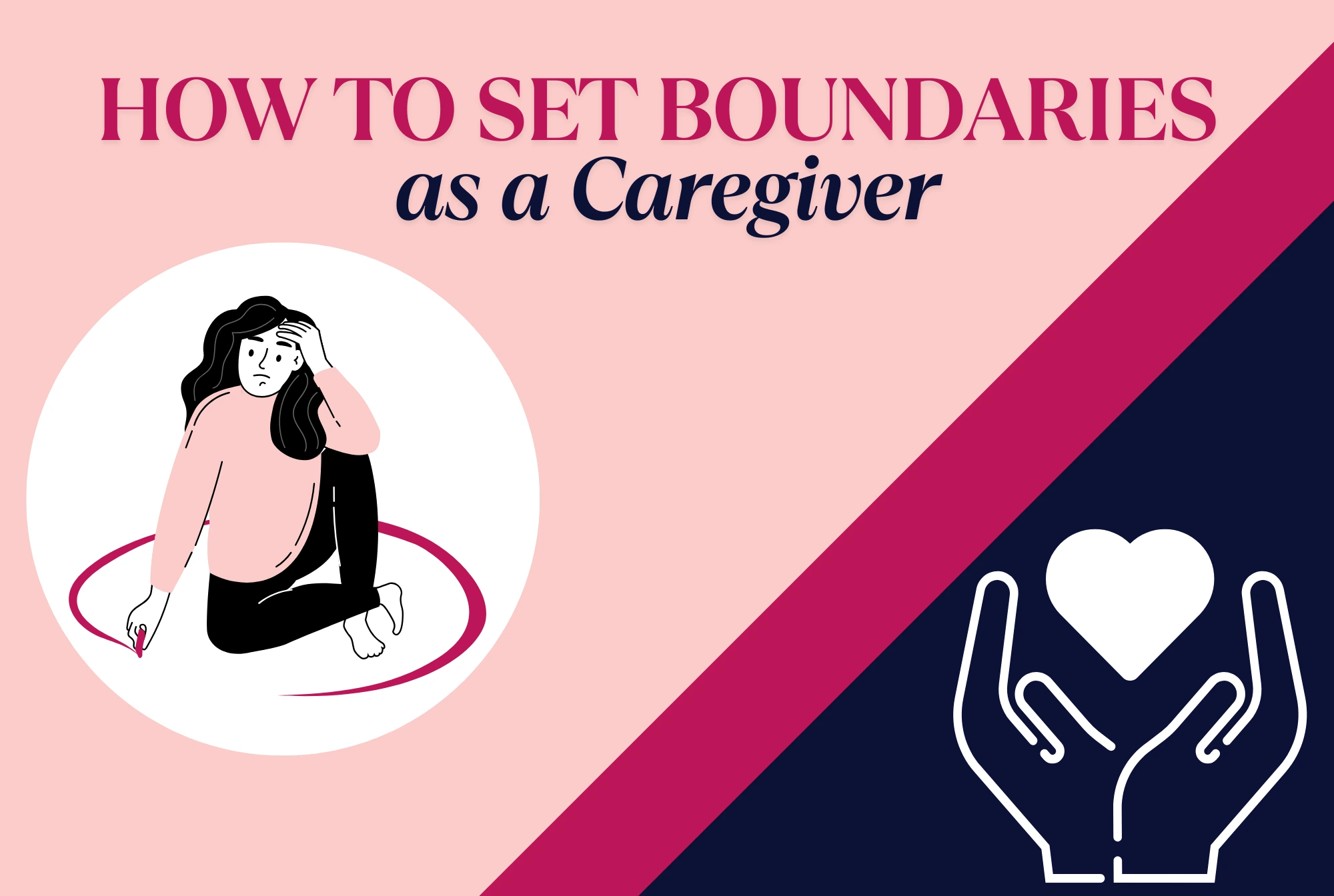
How to Set Boundaries as a Family Caregiver
As a social worker helping seniors maintain their independence at home, I met a lot of family caregivers. They were some of the most inspiring and dedicated individuals I’ve had the privilege of knowing. Their attitudes were often selfless, and they shared true joy about the rewards of caring for an aging loved one. Many were also exhausted, overworked, and uncertain about the future. It’s easy to let your own needs fall by the wayside when someone important to you has needs, too. But here’s the hard truth: caregiver burnout is often inevitable if you don’t set boundaries. And when that happens, you won’t be able to care for anyone—not your senior loved one and certainly not yourself.
Setting boundaries as a family caregiver can feel impossible when demands are high and your time is limited. There’s guilt, obligation, and often pressure from other family members. But boundaries aren’t about being selfish; they’re about protecting your mental, physical, and emotional health so you can continue providing care without losing yourself. Let’s talk about how to set boundaries as a family caregiver so you can continue successfully providing care to the person you love.
Why Do Boundaries Matter?
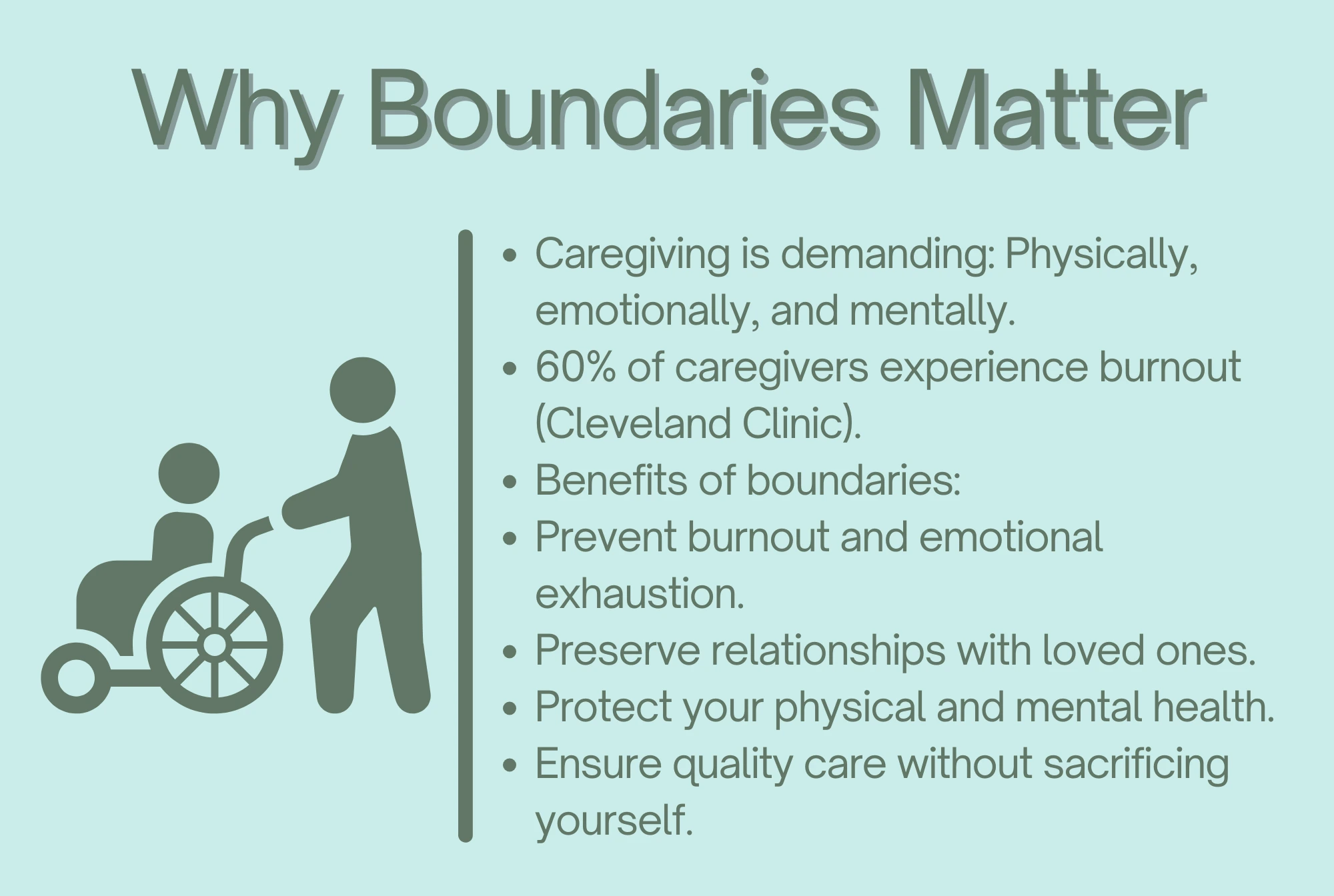
Setting boundaries matters because caring for an aging loved one is demanding. It’s physically, emotionally, and mentally exhausting. Without establishing limits, you risk developing compassion fatigue, resentment, and caregiver burnout, which the Cleveland Clinic has found impacts more than 60% of family caregivers.
Boundaries help:
- Prevent burnout, stress, and emotional exhaustion
- Preserve your relationship with the senior and other family members
- Protect your physical health, endurance, and strength
- Ensure that you can provide quality care without sacrificing your own needs
If you don’t establish clear guidelines for what you can and cannot do without support, the result is often feelings of inadequacy, frustration, and even a desire to give up. You might feel drained, irritable, and unappreciated. That will eventually be a dangerous place to land—for you and your aging loved one.
How Can I Recognize When I Need to Set Boundaries?
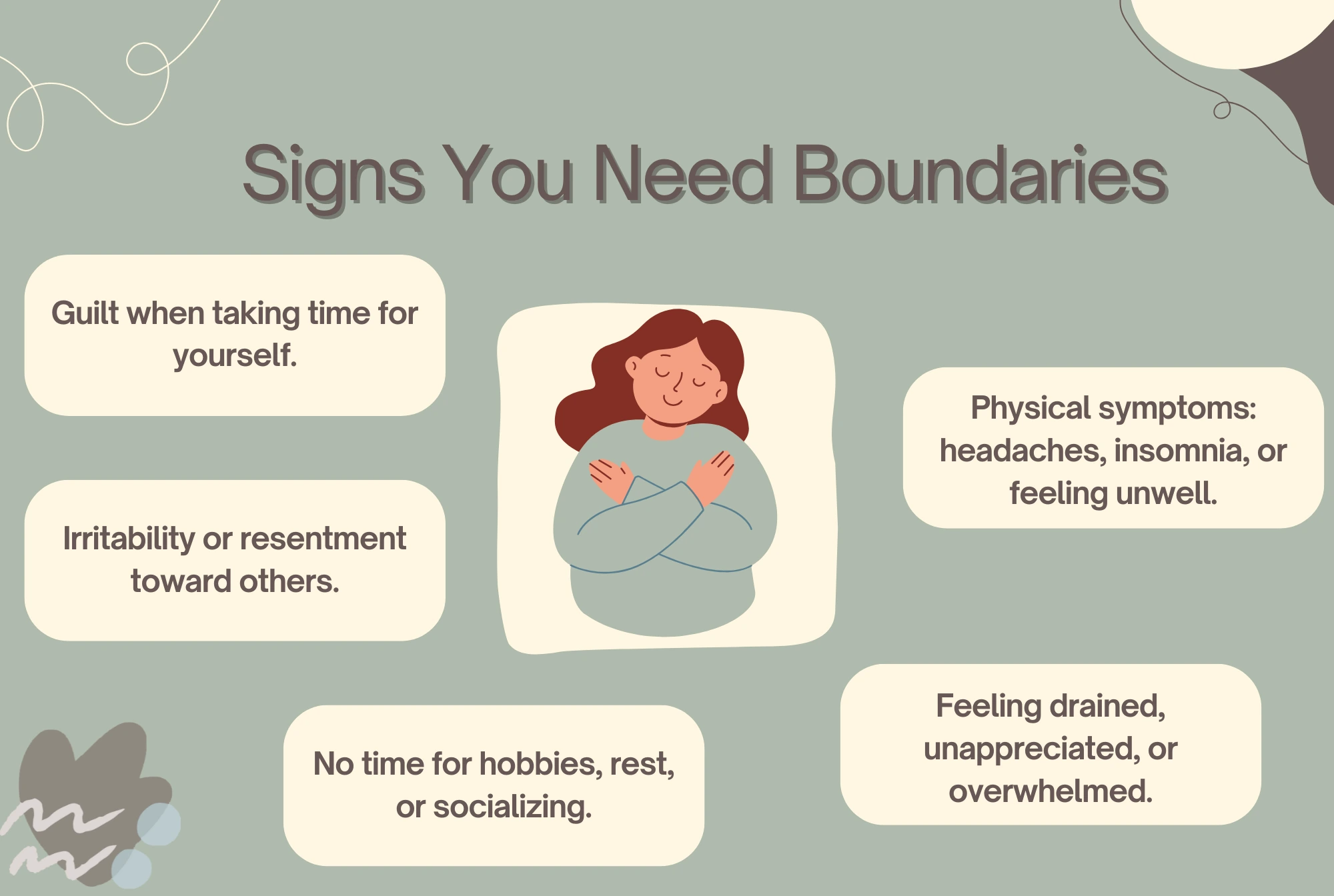
When life is hectic and there’s a lot on the daily schedule, it’s easy to continue moving along and not stop and assess whether or not help is needed. The realization that things feel overwhelming might not hit until it’s almost too late. Avoiding this benefits you and your aging loved one. Here are some signs that you might need to establish clearer limits:
- Feelings of guilt anytime you take a moment for yourself
- Acting jumpy or irritable toward others for even the slightest misgivings
- Convincing yourself that there is no time for hobbies, rest, socialization, or once-loved activities
- Resenting the senior or physically or verbally lashing out
- Resenting other family members who appear to have more time to enjoy life
- Physical symptoms, including stomach aches, headaches, insomnia, or generally feeling unwell
Take note if you’re experiencing any of these signs. They indicate that you would benefit from setting boundaries, seeking respite support, or asking others to chip in a little more.
How to Set Boundaries as a Family Caregiver
1. Identify Your Limits

Start with a self-assessment of what you can and can’t do. This is the time to be honest and recognize your limitations. Do you have any physical conditions that limit your ability to handle certain tasks or help the senior? Are you feeling emotionally drained because of the number of tasks on your plate? How much time can you realistically dedicate to caregiving without compromising the things that are important in your life?
For example, if you’re working full-time, maintaining a marriage, raising a child, and providing care for your aging mother, you have a lot on your plate! Continuing to assist with some tasks is realistic, but continuing to do it all is not. Establish a list of things you can do, such as providing transportation to doctors’ appointments, helping to set up a weekly pill box, preparing meals twice a week, or managing bill-paying tasks.
Pro tip: Be clear about your limitations and let other family members know what they are. If necessary, look into hourly home care or respite support. By working together, you can make daily tasks easier to manage and establish healthy boundaries.
2. Communicate Clearly and Compassionately
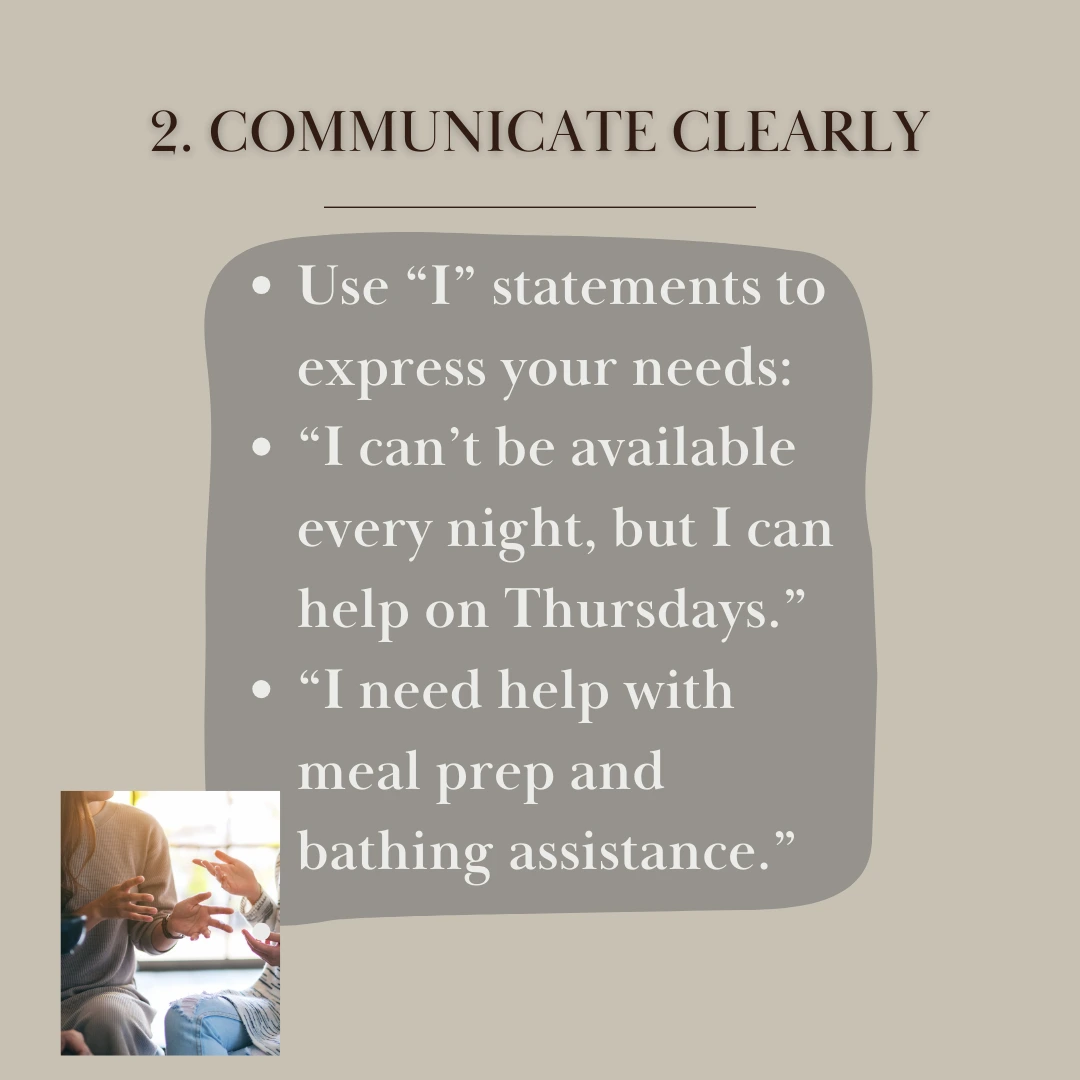
Once you know your limits, communicate them to the senior and other family members. Try to use “I” statements, as they prevent you from sounding accusatory. For example:
- “I love you, but my health also needs some attention. I can’t be available every night, but I can help on Thursday evenings and all day Saturday.”
- “I can’t lift you by myself anymore. I need you to consider using a Hoyer lift or perhaps hiring a professional caregiver.”
- “I can provide transportation to doctors’ appointments and help set up grandma’s weekly pill box, but I need someone to assist her with bathing, walking her dog, and some meal preparation. What can you realistically commit to?”
Communicating your boundaries doesn’t mean you aren’t willing to help—it means you care enough to continue to provide support while also ensuring you’re not running on empty.
3. Learn to Say No (Without Guilt)

Saying no is challenging for family caregivers, especially when their aging loved ones or other family members put the pressure on. But saying no is incredibly important. It’s a recognition that your health and well-being matter, and it makes you a more sustainable caregiver.
Sometimes, it feels better if you can offer alternatives rather than simply saying no:
- “I can’t take you to the grocery store right now, but I can call your neighbor and ask them to help.”
- “I’m not available to wash your hair this afternoon, but I can come by tomorrow.”
Sometimes, it’s important to have difficult conversations and say no, even if immediate alternatives are not available. If the issue is related to safety, continue to meet your loved one’s needs to the best of your ability until an alternative is available. Remain active about seeking an alternative, and be honest with your loved one about your limitations. Continuing to do too much won’t benefit you, and it won’t benefit the senior, either.
4. Accept Help Without Feeling Guilty
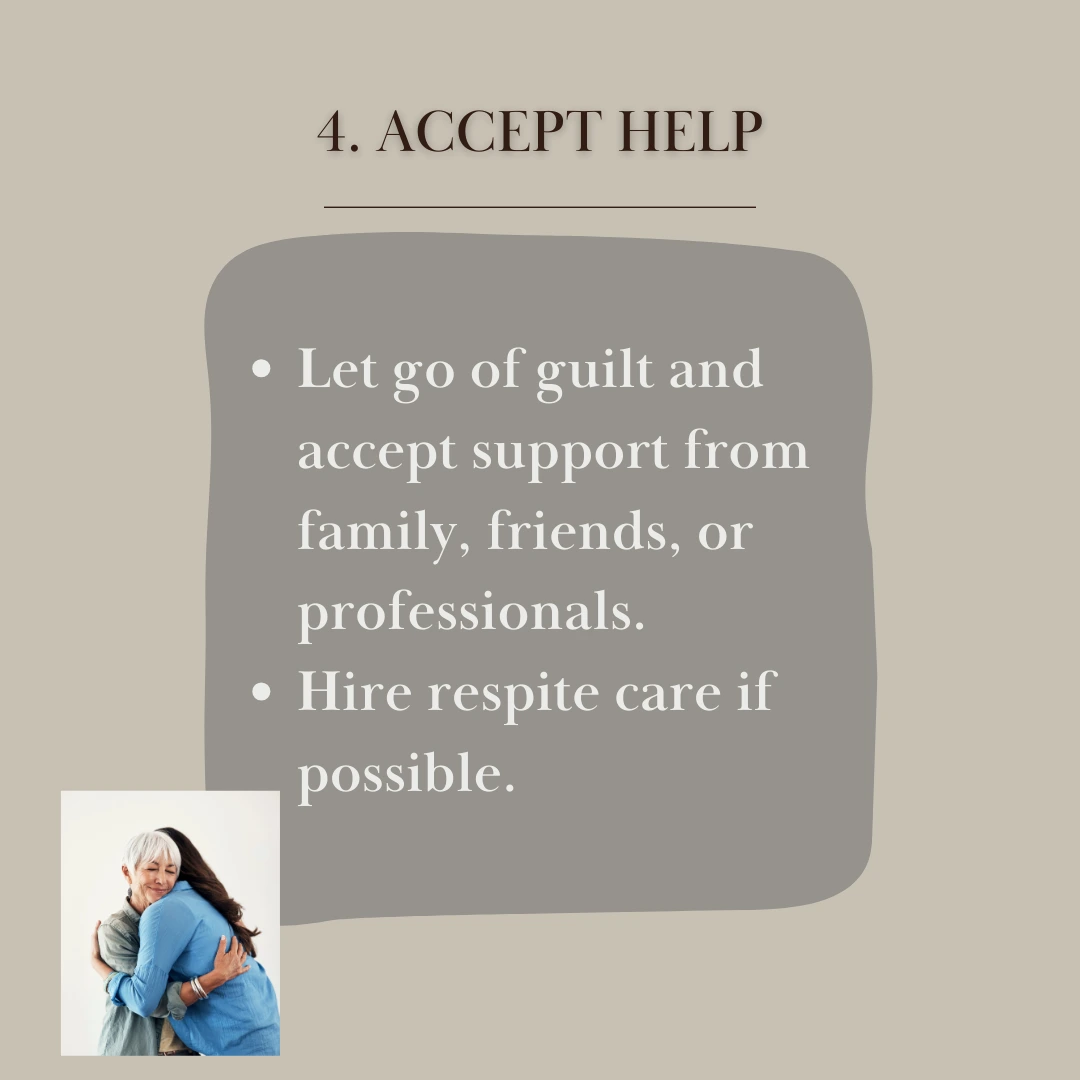
Family caregivers sometimes feel inadequate when they admit they cannot do everything alone. It’s time to let go of those feelings and recognize that accepting help is the healthy choice, and it makes you a better caregiver. If other family members, friends from church, volunteers in the community, or neighbors are available, let them know that you could use their help. Another option is to seek professional respite help. Hiring an in-home aide for even a few hours a week can relieve a lot of stress and help to preserve your physical and mental health.
When someone asks how they can help, speak up! Too often, family caregivers are quick to say that they don’t need assistance out of pride or guilt. Let go of the idea that you have to be a one-man show or a superhero.
5. Schedule Regular Breaks
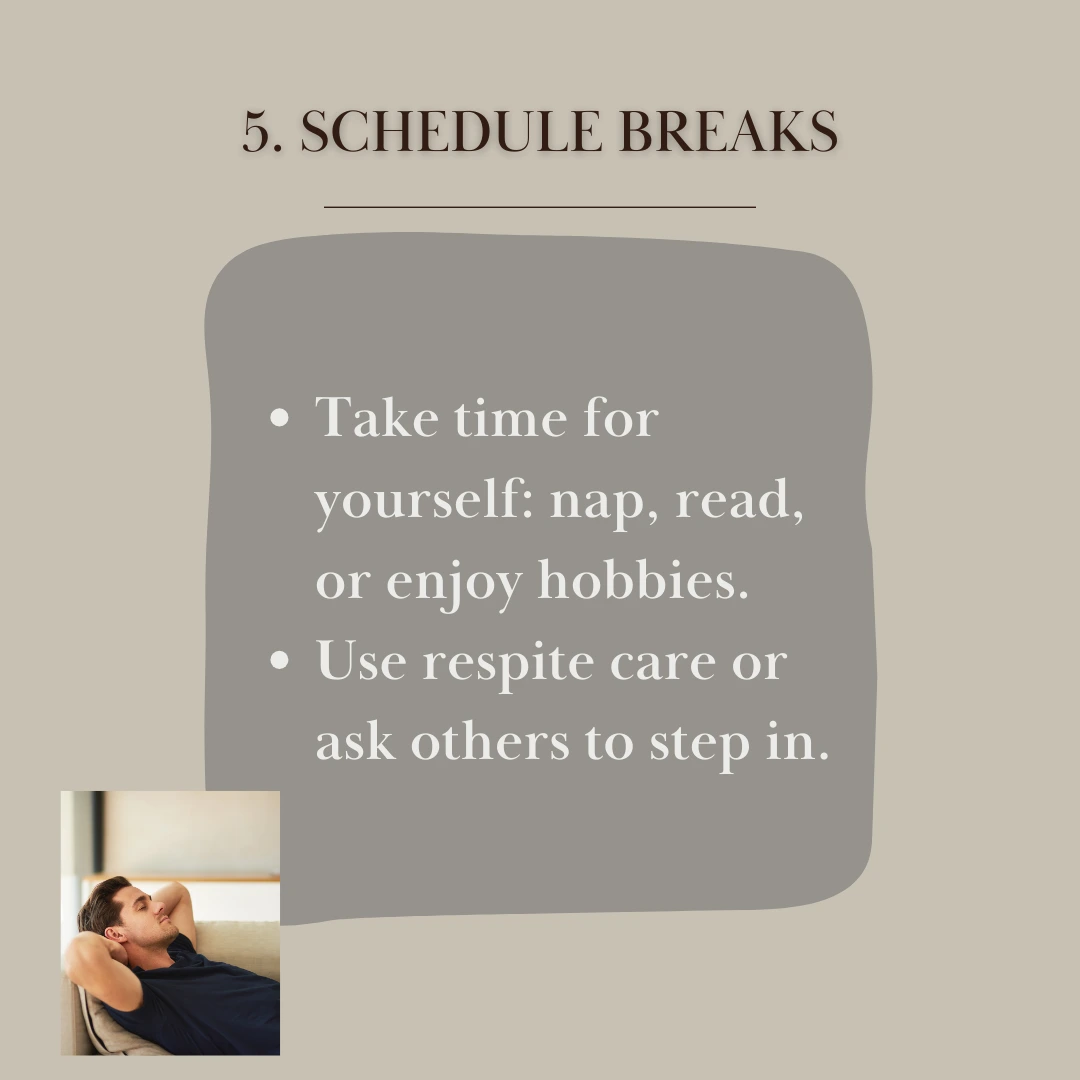
In our day-to-day lives, we all need to find moments of quiet. Caregiving should be no different. Even if you feel like you can’t take your eyes off your loved one, schedule a little ‘you’ time a few times a week.
Ask a neighbor to come sit with the senior for half an hour while you nap. Arrange for another family member to take them out for a couple of hours a day so you can read or catch up on a favorite television show. Let the housekeeping wait and relax when your loved one naps.
This is a prime opportunity to take advantage of respite support if it’s within your budget. Taking time for yourself isn’t a luxury; it’s a necessity.
6. Set Emotional Boundaries
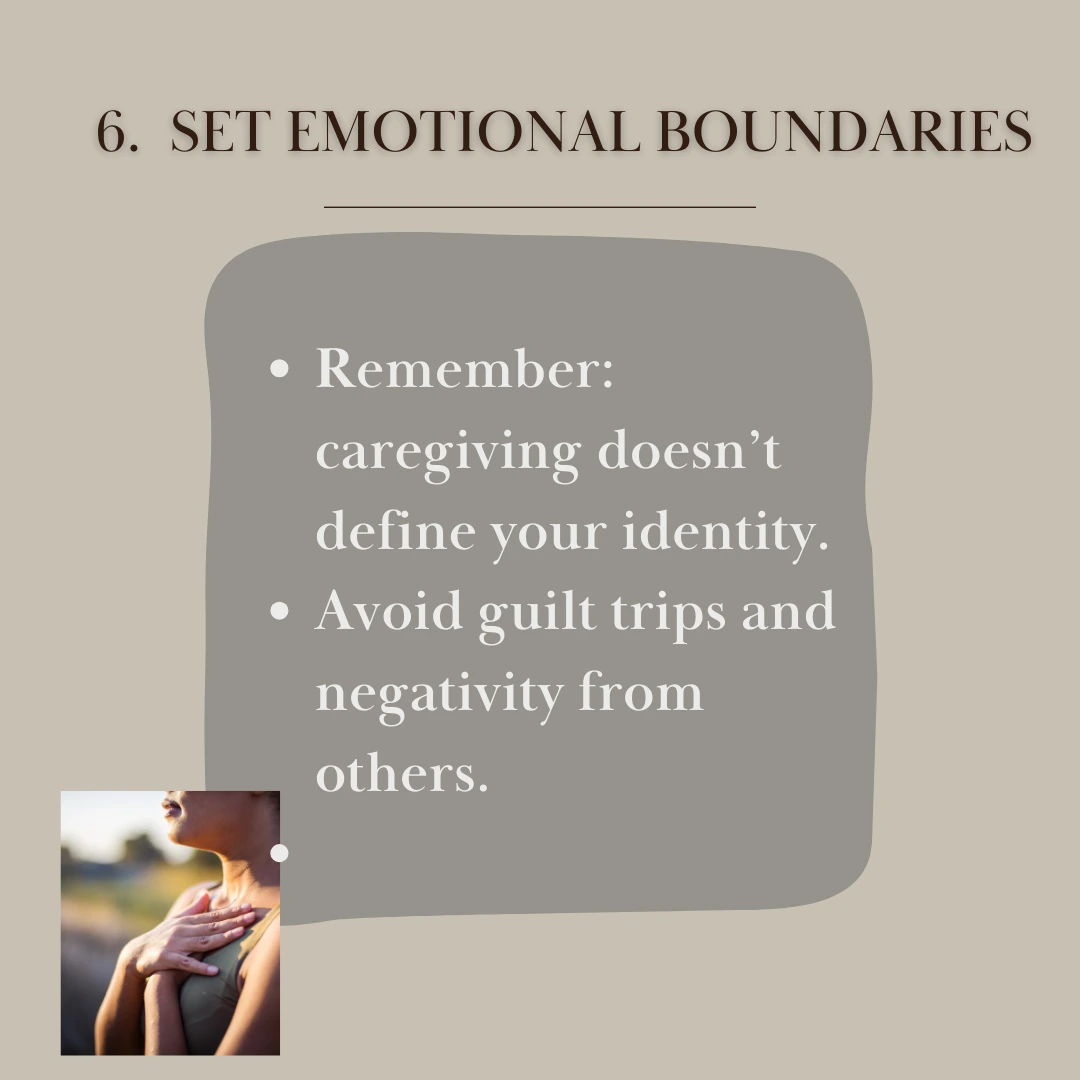
The emotional trials of caregiving are just as present as the physical ones. It’s important to recognize this and set emotional boundaries when necessary. This helps to protect your mental health and your self-identity.
For example:
- Recognize that your role as a family caregiver does not define your entire identity. You are much more, and it can be easy to forget that when you’re always prioritizing your aging loved one’s needs.
- Avoid engaging in guilt trips from family members who aren’t doing their share. You are allowed to take breaks, you should prioritize your health, and you’re not a failure for admitting that handling this demanding role alone is too much.
- Protect yourself from consistent negativity—if someone constantly criticizes your caregiving, discontinue or at least limit your interactions with them.
7. Establish Boundaries with Medical Professionals
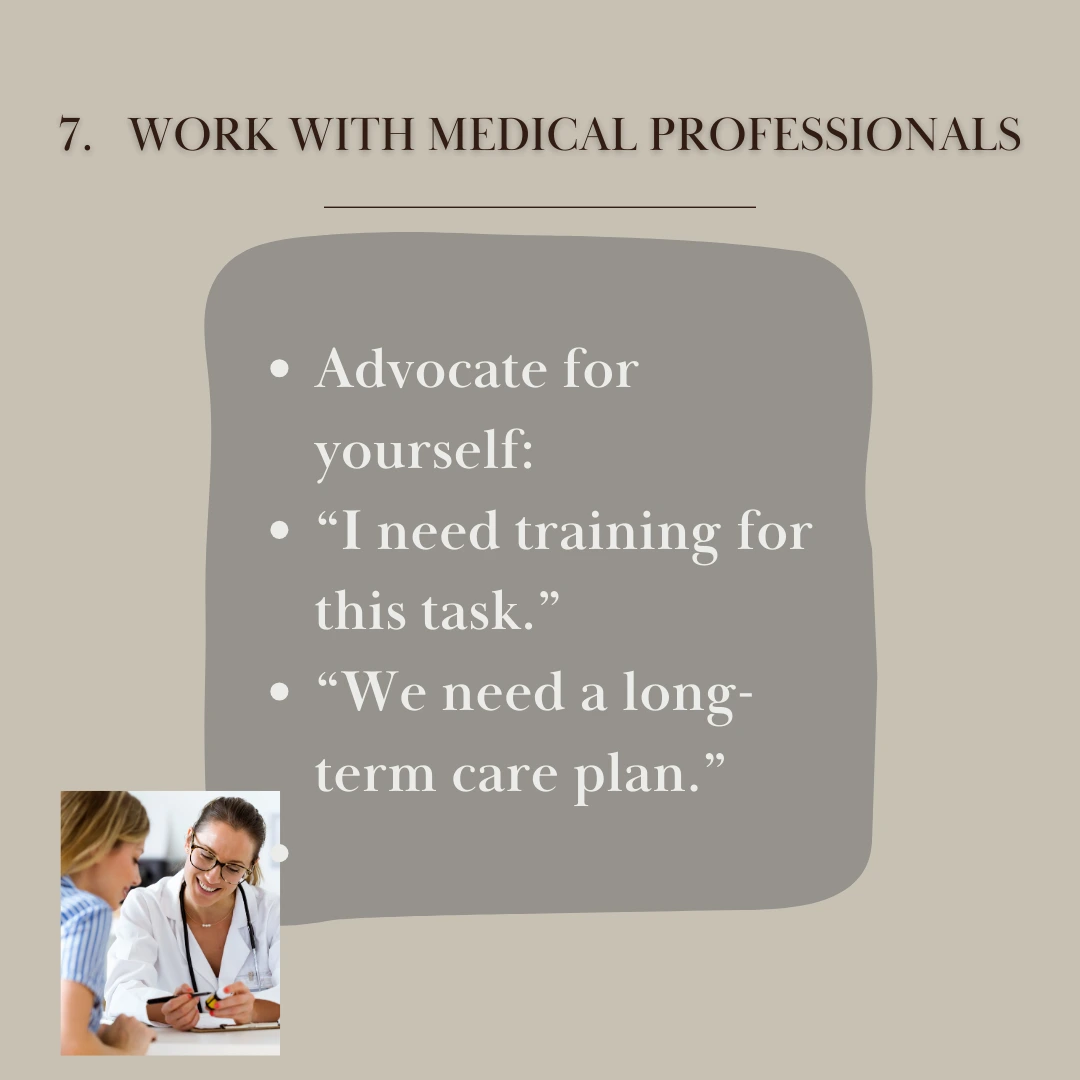
The medical professionals who are handling your loved one’s care are an important part of your support network. To make the most of this relationship, it’s important to maintain open lines of communication and honestly share what you can and cannot do.
If a medical professional expects you to perform a task you’re not comfortable with, advocate on your behalf:
- “I’m not trained to give injections. Can your team provide training, or what other options are available?”
- “The physical demands of this task are more than I can manage. I need assistance. Is home health or another service available for my loved one?”
- “I need your support in helping my loved one to understand the progression of their disease. When can we schedule a time for the three of us to meet and talk?”
- “My loved one’s dementia is progressing, and we need to start having conversations about long-term care plans. Who can you connect me with to help develop a written care plan with established steps and goals?”
8. Take Care of Your Own Health
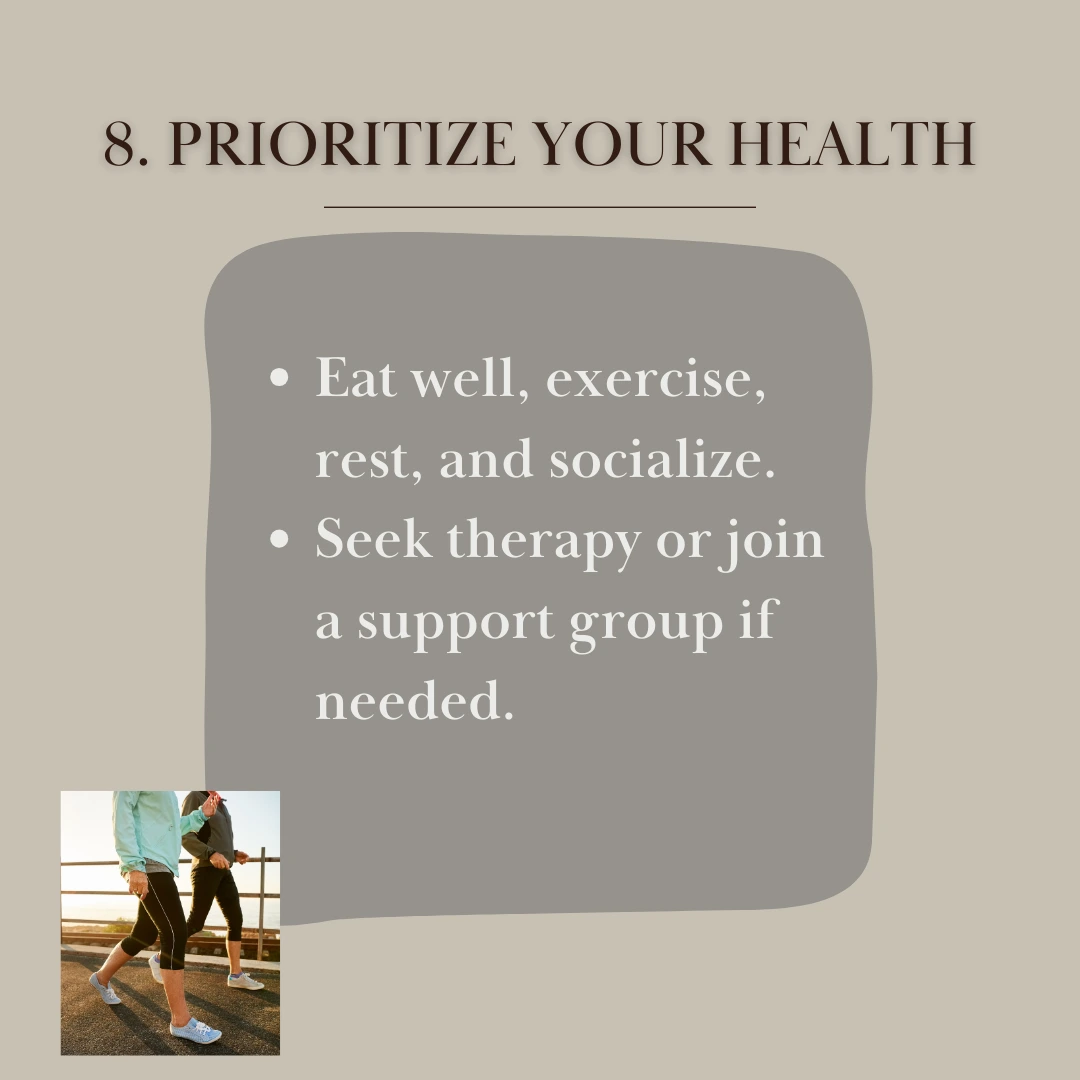
You can’t pour from an empty cup, and when you run out of steam, giving up on caregiving entirely just might be the result. Prioritize your health. Eat a healthy diet, make time for exercise, find moments for rest, and socialize with your friends and family. If you’re feeling emotionally or physically drained, consider talking to a therapist or joining a caregiver support group. This all might feel challenging, but there’s nothing more important.
You’ll do best by your senior loved one if you make a point of putting on your oxygen mask first. Setting boundaries as a family caregiver isn’t easy, but it’s necessary. Admitting you need support is not a weakness; it’s a strength. You deserve to have a healthy and full life outside of caregiving. When you take care of yourself, it benefits you and your aging loved one. So, no matter where you are in your caregiver journey, set those boundaries, stick to them, ignore the naysayers, and give yourself the grace and care that you selflessly give to others every day.

Popular Articles About Caregiving
Originally published March 27, 2025
Author(s):