The Secret to Longevity: Blue Zones?

It’s no secret I’ve been labeled an alternative health advocate for most of my adult life. There’s something undeniably seductive about trying to be the captain of your fate when it comes to taking care of your body. For that reason, I’ve been a huge fan of Dan Buettner, the National Geographic fellow and New York Times best-selling author. If the name seems familiar, it’s because he wrote the 2008 book The Blue Zones: Lessons for Living Longer From the People Who’ve Lived the Longest and the 2015 book The Blue Zones Solution: Eating and Living Like the World’s Healthiest People.
In 2002, Buettner met with demographer and scientist at the National Institute on Aging in Washington, D.C., and earned a grant to research longevity hotspots around the world.
He first made his findings public in the National Geographic November 2005 issue with the article “The Secrets of Living Longer,” which became the third best-selling issue ever in the magazine’s history. Three years later, The Blue Zones was published, and Buettner became the patron saint of longevity.
The good news is that protecting our lifespan through diet and lifestyle choices doesn’t mean we have to embrace deprivation. We do, however, need to pay attention to what we eat and drink, as well as how we use our bodies.
Buettner spent large chunks of time studying communities in Ikaria, Greece; Okinawa, Japan; Ogliastra Region, Sardinia; the Nicoya Peninsula in Costa Rica; and Loma Linda, California.
These were named Blue Zones.
The people in these communities significantly outlive the rest of us and experience lower rates of dementia, diabetes, and heart disease. In “The Blue Zone Solution,” Buettner tells us that the inhabitants of these areas are “products of their environment” who walk a lot, grow their own vegetables, go to bed late, and give themselves permission to sleep in whenever they feel like it.
One thing that all these people have in common is they eat about a cup of beans each day.
Most of us already know that beans are high in fiber, micronutrients, and vitamins and that they eliminate our need for animal protein. But what I didn’t know until I read his book was that eating meat creates a bad balance of gut bacteria to digest it. If you eat a lot of meat, the necessary bacteria to digest it causes inflammation, which is at the root of every age-related disease.
Eating beans, however, teaches your gut to switch to a different type of flora that lowers inflammation and seems to discourage obesity.
Buettner discovered that Blue Zone people tend to lead physically active lives and eat much less in the way of animal products than we do. He predicts: “Our meat-eating habits are going to be looked at in the same way as we look at our smoking habits in the 1970s. … no one will be ignoring the fact that it is lowering our life expectancy.”
Next week’s column will continue the Blue Zone discussion in more detail, but in the meantime, here are five suggestions that can easily enhance your longevity no matter where you live:
- Drink wine moderately and regularly.
- Move your body regularly. Walking, gardening and housework count.
- Eat a mainly plant-based diet.
- Stop eating when your stomach is 80% full.
- Feel free to drink strong coffee.
COPYRIGHT 2025 CREATORS.COM
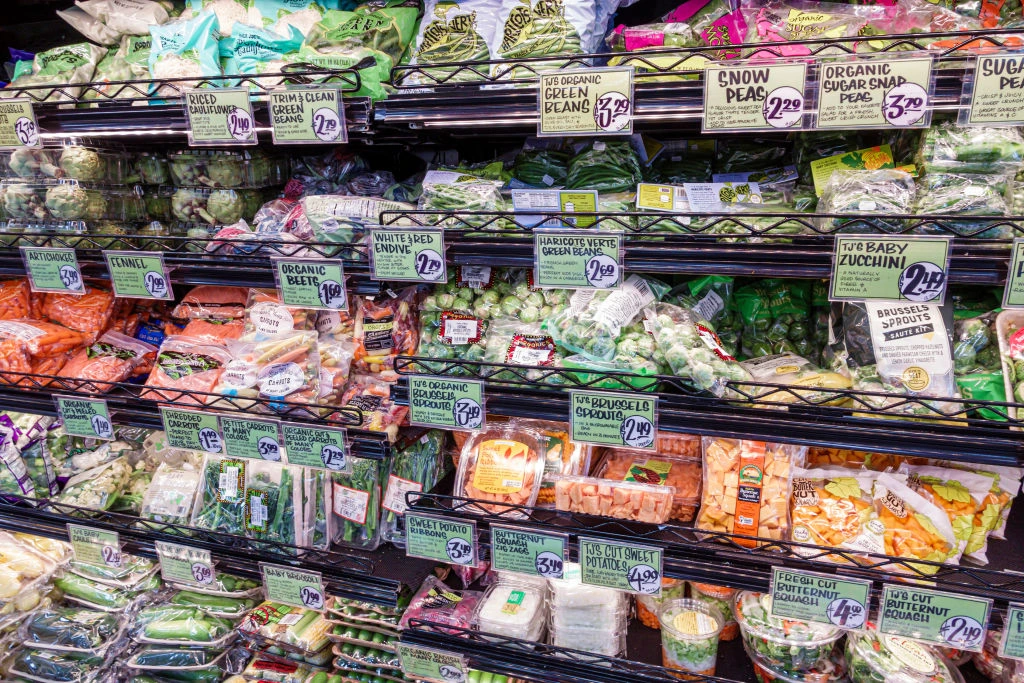
Image Credit: Westend61, Getty Images | Florida, Miami Beach, Trader Joe’s, grocery store, precut brussels sprouts, zucchini, green beans, carrots. (Photo by: Jeff Greenberg/Education Images/Universal Images Group via Getty Images)
Amazon Associate; this post contains affiliate links that provide a small commission without any added cost to the user.

Popular Articles About Nutrition
Originally published February 17, 2025
Author(s):