What Are the Roles of Wills and Trusts In Estate Planning?

Estate planning is a crucial aspect of managing and distributing one’s assets effectively and according to one’s wishes. Wills and trusts are two primary tools that individuals use in estate planning to ensure their assets are managed and distributed as intended after their death. This article explores the significance of wills and trusts, detailing their distinct roles and how they complement each other to shape an effective estate plan.
What Is a Will?

A will is a legal document that outlines how a person’s assets and properties will be distributed after their death. It allows the testator (the person making the will) to specify their wishes regarding the distribution of their estate, the care of any minor children, and the appointment of an executor to manage the estate.
Primary Objectives of Wills
The primary objective of a will is to express the testator’s testamentary intent—how they wish their assets to be distributed after their death. Wills also serve to nominate guardians for minor children, ensuring they are cared for by trusted individuals. Additionally, wills designate an executor who will be responsible for managing the estate and ensuring that the testator’s wishes are carried out.
Importance of Wills in Estate Planning
One of the most critical functions of a will is the nomination of an executor and guardian for minor children. The executor is responsible for administering the estate, paying any debts and taxes, and distributing the assets as specified in the will. Nominating a guardian for minor children ensures that they are cared for by someone the testator trusts.
A will provides clear instructions on how the testator’s assets should be distributed, ensuring that their wishes are followed. This includes specific bequests to family members, friends, or charities, as well as the distribution of personal belongings and real estate. A well-drafted will can prevent potential disputes among heirs and provide clarity and peace of mind to the surviving family members.
Probate Process and Will Validation
After the testator’s death, the will goes through the probate process, where it is validated by a court. The probate process ensures that the will is genuine and that the testator’s assets are distributed according to their wishes.
This legal validation provides a safeguard against fraud and ensures that the executor carries out the testator’s instructions. Although probate can be time-consuming and costly, it serves as an important step in confirming the legitimacy of the will. The exact process and costs can vary significantly depending on the jurisdiction and the complexity of the estate.
What Is a Trust?

A trust is a legal entity created to hold and manage assets on behalf of beneficiaries. Trusts are established by a grantor (the person creating the trust) and managed by a trustee (an individual or institution responsible for administering the trust). Trusts are designed to manage and protect assets, providing benefits to the beneficiaries according to the terms specified by the grantor.
Advantages of Trusts
Trusts offer several advantages in estate planning. One of the primary benefits is that assets held in a trust generally do not go through the probate process, allowing for a quicker and more private distribution of assets. Trusts also offer a level of privacy, as the details of the trust do not become public records unless required by state law.
Additionally, trusts can provide asset protection, safeguarding the trust’s assets from creditors or legal claims. This makes trusts a valuable tool for individuals looking to protect their wealth and ensure a smooth transfer of assets.
Complementary Functions of Wills and Trusts

Wills and trusts can be coordinated to create a comprehensive estate plan. For example, a will can include provisions that transfer assets into a trust upon the testator’s death. This coordination ensures that all assets are managed and distributed according to the testator’s wishes, providing a seamless transition of asset management. Such planning allows for flexibility in addressing various needs and circumstances that may arise over time.
Trusts can address specific needs that may not be covered by wills. For instance, a trust can provide for the long-term care of a beneficiary with special needs or manage assets for minor children until they reach a certain age.
Trusts offer flexibility in how and when assets are distributed, allowing for tailored solutions to unique circumstances. For example, a special needs trust can ensure that a beneficiary with disabilities receives financial support without affecting their eligibility for government benefits.
Trusts provide a higher degree of flexibility and control over asset distribution compared to wills. The grantor can set specific terms for how and when the trust’s assets are distributed, ensuring that the beneficiaries receive the assets under the right conditions.
This control can be particularly useful in managing large estates or complex family dynamics. Trusts can also provide for contingencies, such as the grantor’s incapacity, ensuring that assets are managed and protected even in unforeseen circumstances.
Types of Trusts and Their Specific Roles
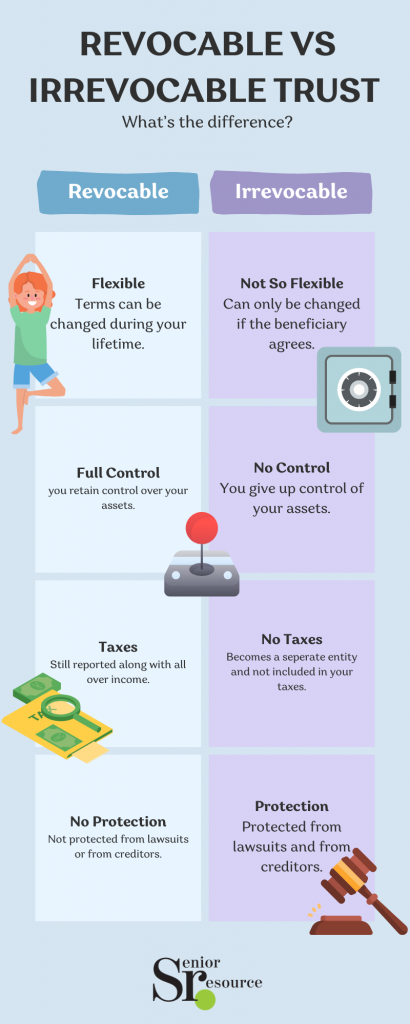
Revocable Living Trusts
Revocable living trusts are a popular tool in estate planning because they allow the grantor to retain control over the trust’s assets during their lifetime. These trusts can be amended or revoked at any time and are particularly useful for avoiding probate.
In the event of the grantor’s disability or incapacity, the trust provides a mechanism for managing the assets without the need for court intervention. This ensures that the grantor’s affairs are handled smoothly and according to their wishes.
Irrevocable Trusts
Irrevocable trusts, once established, cannot be easily altered or revoked. These trusts are often used for asset protection and tax efficiency. By transferring assets into an irrevocable trust, the grantor removes them from their taxable estate, potentially reducing estate taxes.
Additionally, irrevocable trusts can protect assets from creditors and legal claims. This type of trust is particularly beneficial for individuals with significant assets or those seeking to minimize estate taxes.
Testamentary Trusts
Testamentary trusts are created by a will and take effect upon the testator’s death. These trusts can be used for specific purposes, such as providing for minor children or managing assets for beneficiaries until they reach a certain age.
Testamentary trusts offer a way to manage and distribute assets according to the testator’s wishes while providing ongoing oversight and protection. They are often used to ensure that young beneficiaries receive support and guidance until they are mature enough to manage their inheritance.
The Bottom Line on Wills and Trusts

Wills and trusts play distinct yet complementary roles in estate planning. Wills provide a clear outline for asset distribution, nomination of executors, and guardianship of minor children. Trusts offer additional benefits, such as avoiding probate, ensuring privacy, and providing asset protection. Together, they create a comprehensive estate plan that ensures the individual’s wishes are carried out effectively.


Popular Articles About Wills, and Trusts
Originally published August 06, 2024
Author(s):