6 Pet-Friendly Senior Housing Options for Animal Lovers

As a senior, it can be stressful when it’s time to move from your home to a senior living community. Many people worry about new adjustments, meeting new people, and whether they will be comfortable. Another factor that can worry seniors is how they are going to find a place to take their pets with them.
Sadly, I’ve read several heart-wrenching stories about seniors who aren’t able to take their furry friends with them, but it doesn’t have to be this way. With a little research, you can find a fantastic place for you and your fur baby.
Where to Look for Senior Housing Options with Pets

There are various places that you can look to find pet-friendly living options for seniors. Some of these places include:
Senior Living Conferences
If there’s a senior housing fair going on in your area, ask questions. The representatives from different communities will be glad to help you and answer your questions!
Consult with Senior Living Advisors
Connect with a local senior living advisor. They can help you locate a place that takes pets and meets your other needs and preferences, as well!
Community Websites
Look at different senior living communities you are interested in and see if they post their pet policies on their website. You can probably download this information and print it out to read later at your convenience.
Talk to Other Pet Owners
Ask your friends and neighbors if they know any communities that take pets. If you’re a member of a senior center or an adult day care program, reach out to your fellow animal lovers and see if they can offer any assistance or advice!
What to Know About Pet Policies
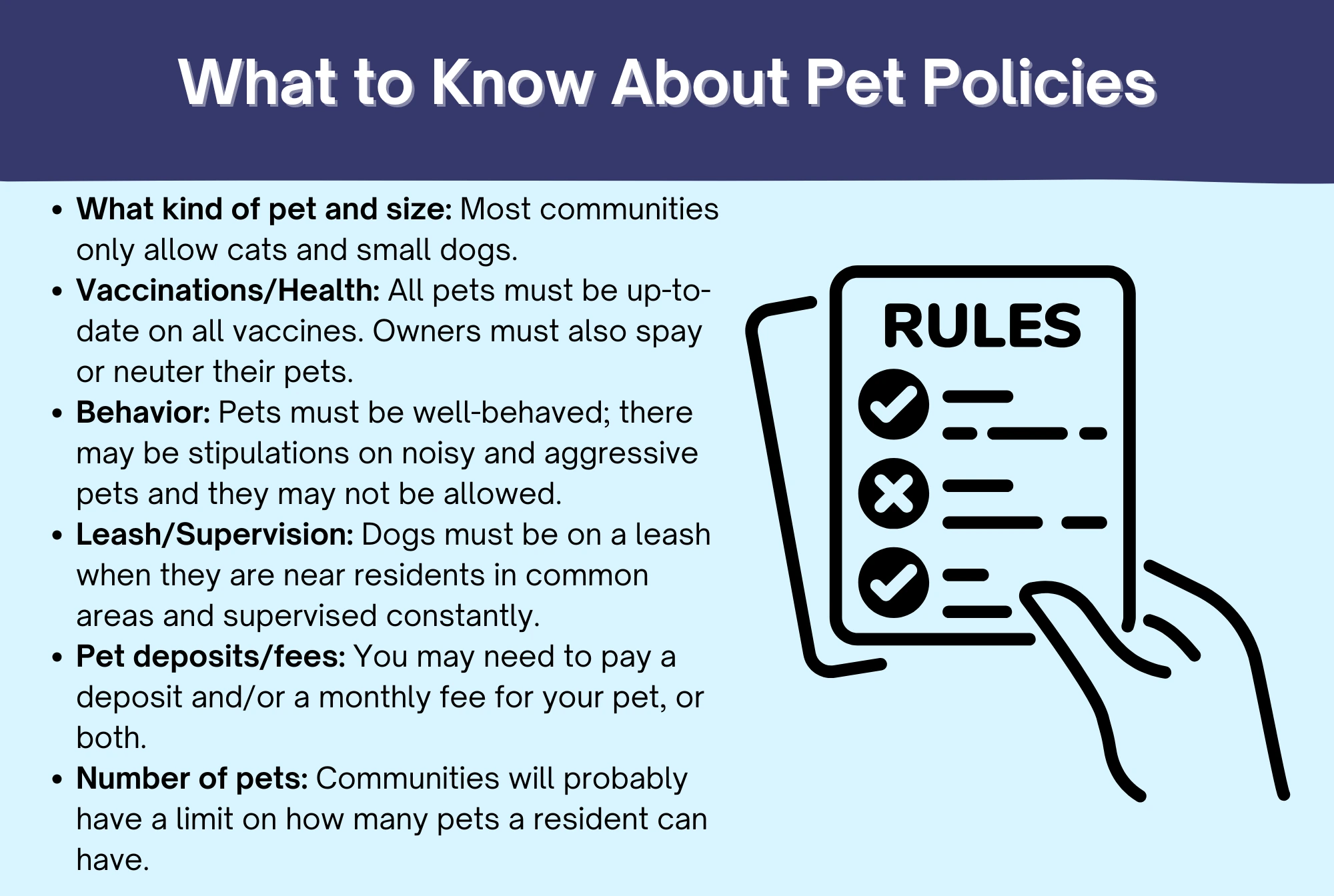
Every community will have its own pet policy. This is crucial for the well-being of both pets and their senior pet parents. Some common things include:
- What kind of pet and size: Most communities only allow cats and small dogs.
- Vaccinations/Health: All pets must be up-to-date on all vaccines. Owners must also spay or neuter their pets.
- Behavior: Pets must be well-behaved; there may be stipulations on noisy and aggressive pets and they may not be allowed.
- Leash/Supervision: Dogs must be on a leash when they are near residents in common areas and supervised constantly.
- Pet deposits/fees: You may need to pay a deposit and/or a monthly fee for your pet, or both.
- Number of pets: Communities will probably have a limit on how many pets a resident can have.
Best Dog Breeds for Community Living
As mentioned above, there is usually a size limit for dogs in senior living communities. Some of the best breeds that thrive in an apartment setting are:
Pembroke Welsh Corgi
A favorite of the late Queen Elizabeth, these quick and agile dogs make loving companions. Don’t let their small size fool you—they’re notoriously good watchdogs!
Toy Poodle
Standing at no more than 10 inches, these tiny dogs have big personalities! They’re intelligent and easy to train, making them an ideal choice for most seniors—and most apartment complexes!
Maltese
Did you know that Maltese dogs weigh only 7 pounds? These dogs don’t shed much and live long lives, despite their diminutive size. They may be stubborn, but they also happen to be highly trainable.
Cavalier King Charles Spaniel
Gentle and affectionate, these small dogs have a long and storied history dating back to 16th-century England. They’re adaptable and friendly, the kind of dog that plays well with others. And, of course, they’re also small, which makes them an ideal candidate for senior community living.
West Highland White Terrier
Affectionately dubbed the “Westie”, these sociable, intelligent pups were bred to hunt rats and other underground rodents. Despite their working-class origins, they adapt well to apartment living and are small enough to meet most pet-friendly communities’ guidelines. Oh, and of course, they’re also adorable!
French Bulldog
Don’t let the name fool you—”Frenchies” are much smaller than their hardier relatives! They’re known for their quiet nature, seldom barking, making them an ideal companion for any senior…especially those who want to move into a senior living community.
These dogs are smaller and have moderate levels of energy compared to their larger counterparts. This list is not exhaustive, and you should always do your own research! However, the dog breeds listed above can be great companions and adapt to apartment living—provided you choose a pet-friendly senior living community!
Choosing the Right Community
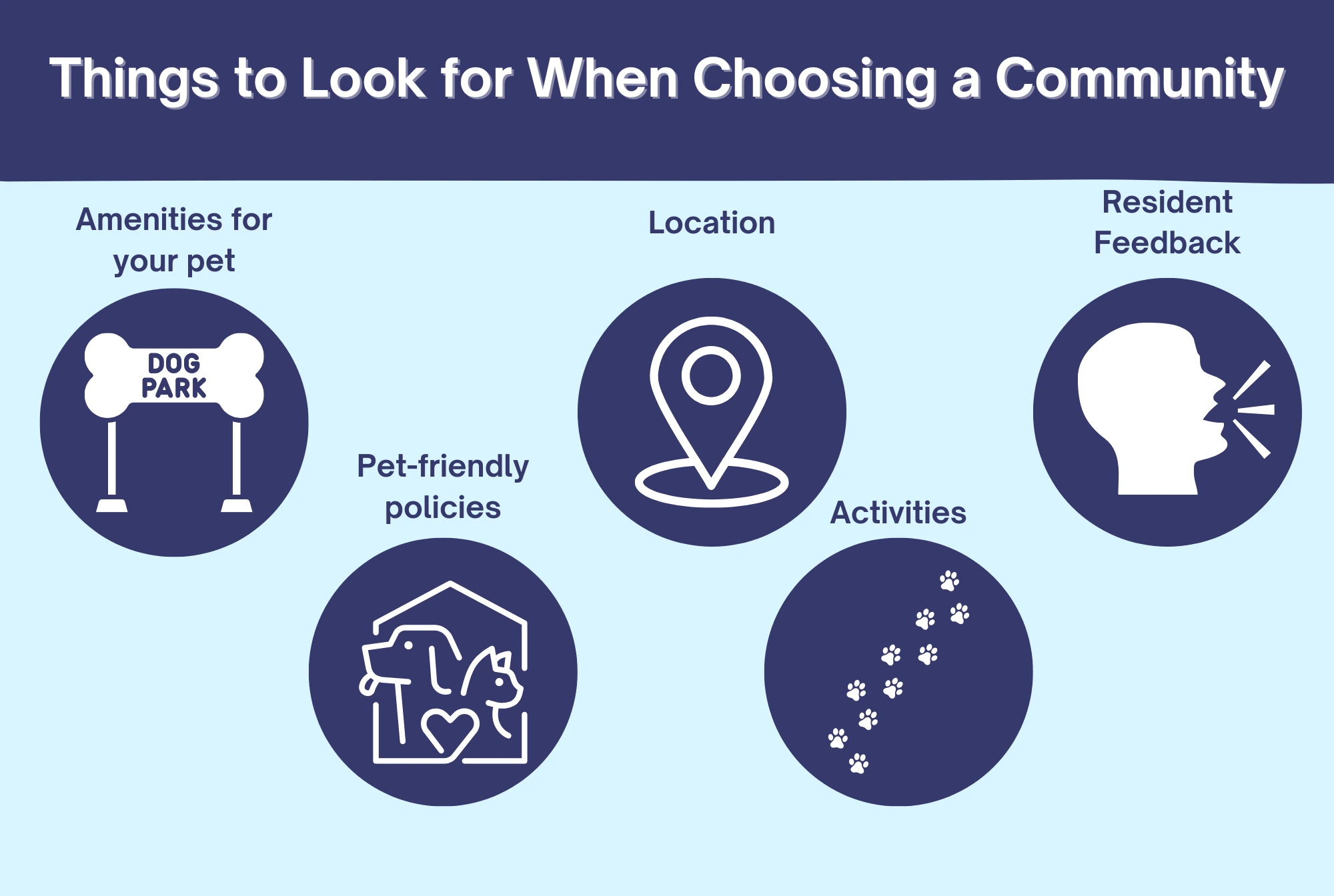
Finding the right community for you and your pet can be a challenge! After all, you need to make sure there are activities for both you and your furry friend. If you’re not sure what to look for in a senior living community, here are a few key features you should keep your eye on:
- Amenities for your pet: Look for communities with dog parks, walking trails and poop bag dispensers in case you forget to bring one while going on a walk.
- Pet-friendly policies: Read their pet policies closely to make sure that they meet your needs. If you have questions, ask.
- Location: Take into consideration where the community is located. Is it near a busy, noisy road? This could be an issue for both you and your animal, especially if they ever get away from you. Instead, look for communities that are in quieter areas, which will be beneficial for both you and your pets’ physical, mental, and emotional well-being.
- Community activities involving pets: Ask what activities they have for animals like pet parades, photo contests, or therapy animal visits for residents. You may even want to ask if they have a mobile groomer or veterinarian come to make things easier for their residents.
- Resident feedback: While visiting, talk to other residents about their experiences and how they like the pet policies that are in place.
How to Overcome Challenges
Communities with pets and people have to overcome challenges like allergies and safety. One way to help is to choose a hypoallergenic animal, which means they shed less and don’t cause as many allergic reactions.
The community may designate pet-friendly areas so that people with allergies can avoid being around animals.
Other challenges for older adults include taking their pets to the groomer or the vet and sometimes taking them outside for bathroom breaks. Ask the staff at the community you are considering if they have staff who can help with walking and feeding, or if they have mobile services that come to help the residents. Don’t be afraid to ask for help, especially if it benefits your furry friend!
How Animals Benefit Older Adults

Keeping seniors with their pets is crucially important for all involved. There are all kinds of ways animals benefit seniors.
- They enhance a senior’s emotional health and prevent loneliness. Having a pet gives us a sense of purpose and a reason to get out of bed every day. Pets also help us make friends and bond with other people.
- Pets help seniors stay active. Dogs need to be walked at least twice a day, and you should play with your cat at least fifteen minutes a day. This involves movement which is beneficial to heart health and helps promote flexibility. Furry friends help seniors live a more active lifestyle.
- Pets help with mental health, too. They help reduce stress and anxiety, boosting mental health. Taking care of a pet regularly provides routine and structure, which helps with memory and cognitive function. Pets thrive on routine as well. Petting a cat or dog helps lower blood pressure, releases oxytocin, and eases depression.
- Emotional support pets are crucial to their owners’ well-being. They bring comfort during hard times and let seniors know they are not alone.
- They help build community. Who doesn’t love to talk to someone about their pet? Even though I’m partial to cats, I love talking to people about their dogs and giving some extra pets if the owner says it’s okay. We have a dog named Tyson in our complex, and I always give him extra pets when I see him. He is a sweet boy.
- They provide security. Pets not only provide emotional security, but they also hear everything and can alert their owners when something may be amiss.
Takeaway
Finding the right pet-friendly living community will take some time. First, sit down and make a list of your wants and needs in a facility. Next, contact each facility and ask questions. Go on a tour of each facility and ask more questions if needed. Take home brochures and information so you can go over each community’s pet policies again. Then talk to your family and friends and get their advice and input to see what they think. When you have a big decision to make, a sounding board is always helpful. If you have the time and it takes a few weeks to make a decision, it’s okay. This is not something you want to rush. By thoroughly researching each community and getting feedback, you will make the best choice for you and your fur baby.
Find senior apartments near you.

Popular Articles About Senior Housing
Originally published March 27, 2025
Author(s):