11 Secrets To Better Sleep as You Age

If you’re a senior struggling with sleep, you’re not alone. 50% of older adults complain about sleep issues. No matter the age, sleep is so vital to our health. A common belief is that as we age, we need less sleep. That is a myth, as seniors need seven to nine hours of sleep on average per night. Sadly, as we age, our bodies produce less growth hormone, which disrupts our deep sleep patterns. This leads to less melatonin being created, meaning that we have a harder time falling asleep and wake up more often during the night. Many other factors fall into place, as well. But here’s the good news: many sleep issues can be changed with better habits. Better yet, getting older doesn’t mean we can’t sleep well! Here are a few secrets that might just help you get better shut-eye.
Common Causes of Senior Sleep Issues
While many older adults wake up several times during the night for no reason at all, it’s more than likely that an underlying issue is the culprit. In fact, many health conditions are tied to sleep issues. The most common causes of sleep problems in older adults include:
- Changing sleep architecture – Sleep architecture refers to the basic structural organization of normal sleep (REM vs NREM sleep).
- Menopause, which can carry into post-menopause.
- Chronic health issues such as diabetes, heart disease, and arthritis.
- Prescription medications can disrupt sleep or cause insomnia.
- Increased sedentary lifestyle or not exercising during the day.
- Grief and loneliness due to life changes or the loss of loved ones.
- Depression and anxiety.
- Financial stress.
11 Secrets To Better Sleep as You Age
1. Reduce stress.
It goes without saying that we experience far too many life changes as we age. From retirement to the death of a loved one to downsizing, older adults have a thousand reasons to be stressed. Unfortunately, stress interrupts sleep. Worse still, it can also cause other health issues, such as hypertension and an increased heart rate. To get better sleep, get rid of your stress. Find someone to talk with about your feelings so you don’t hold them in. Listen to soothing music before bed. Read a book to feel relaxed. Or get a massage to relax and allow a peaceful state of mind. Whatever it takes to help you feel relaxed and stress-free!
2. Follow a consistent sleep schedule and bedtime routine.
Try to go to sleep and wake up at the same time every day. Also, get into a routine at bedtime. Whether you wash your face and brush your teeth, or take a warm shower or bath before bed, keep a consistent routine to allow the brain to recognize the signals for bedtime. An irregular sleep schedule can wreak havoc on your health and put you at risk for developing chronic health conditions, like diabetes. So, go to sleep and wake up around the same times! Not only will this help you sleep better, but it can also benefit your overall health and well-being!
3. Eat and drink well during the day.
Have you ever heard the phrase, “Eat, drink, and be merry”? Well, turns out, it might not be such bad advice! As a matter of fact, diet plays a big role in our sleep patterns. Have a light snack before bed if you wake during the night due to hunger. Additionally, diets high in sugar can wake you from a deep slumber, so try to cut out sugars and refined carbohydrates. Avoid big meals and spicy foods close to bedtime, as they can do a number on your tummy. And while coffee addicts might recoil at this next tip, make sure you avoid caffeine late in the day. Try not to drink coffee or any sort of caffeinated beverage after 6 p.m. so you’ll feel tired and fall asleep more easily. Also, avoid fluids close to bedtime, or you’ll be running to the bathroom for a pee break when you should be dreaming!
4. Avoid alcohol.
Although alcohol can make you sleepy, it does not allow for a restful, full sleep. In fact, drinking heavily can contribute to sleep disorders, like insomnia and sleep apnea, and interfere with circadian rhythms. According to The Sleep Foundation, experts recommend that you avoid alcohol at least 3 hours before bedtime. If you must drink, don’t drink too much and try not to drink every day. You’ll get a much better night’s sleep if you limit your alcohol consumption!
5. Exercise during the day.
Did you know that the hormones released during exercise can lead to better sleep? According to Johns Hopkins, exercise can also help you fall asleep more quickly and improve your sleep quality. Plus, working out can make your body tired, which can motivate you to crawl into bed and shut your eyes. Try not to work out too close to bedtime. When you work out, your endorphins and adrenaline will be high, which can make it hard for you to fall asleep.
6. Get natural light during the day.
Sunlight regulates our melatonin and our sleep-wake cycle. So, keep your shades open to allow natural light to enter your home. If you live somewhere that doesn’t have lots of natural light during certain times of year, get a light therapy box. Try to spend at least 30 minutes outside every day. We guarantee you’ll see an improvement in your sleeping patterns and your sleep quality!
7. Try not to nap during the daytime.
We know, we know. Naps are nice and something you probably look forward to every day. Plus, napping during the day seems like a logical thing to do if you’re not sleeping well at night! However, naps can be counterproductive, making it harder for you to fall asleep at night. If you do need to nap, try to keep them short, around 10-40 minutes. Also, try to get your nap in early in the day so you’re still sleepy at bedtime.
8. Devote the bedroom to sleep.
Sometimes, “bedroom” seems like a misnomer. That’s because we use our bedrooms as an all-purpose room or even a living room! It’s where we do our work, watch TV, hang out with our friends, and enjoy our hobbies. However, that can make our brains see our bedrooms as anything but the sleeping space they’re supposed to be. Try to use your bedroom for sleep and sex only. The good news is that sex and physical intimacy, such as cuddling and hugging, can promote more peaceful sleep, too!
9. Keep your bedroom dark, cool, and quiet.
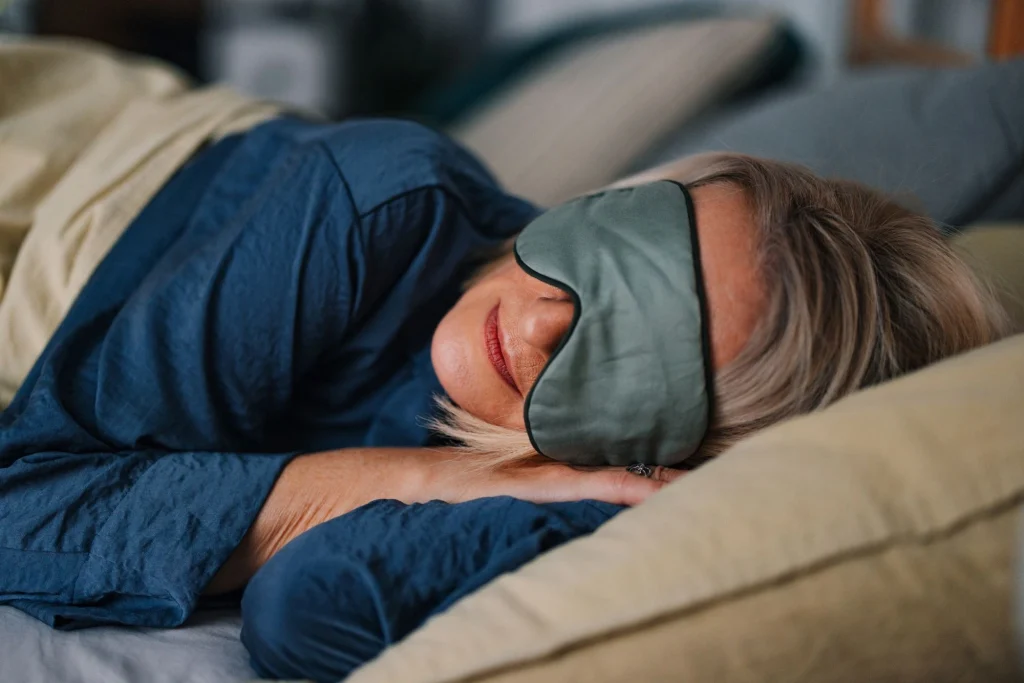
Nobody likes tossing and turning in a hot room! That’s why you need to keep your bedroom cool, dark, and quiet. Those can lend themselves to a long, peaceful sleep. Use a fan, a sleep noise machine, and an eye mask if needed. Also, try not to sleep with the TV on. If you do need your favorite show playing in the background to sleep, set a sleep timer so your TV will shut itself off after an hour or so.
10. Avoid sleep aids and medications.
Have you ever popped a melatonin gummy to help you sleep? Turns out, it might not be promoting better sleep. While some sleep aids can help you fall asleep in the short term, long-term effects can be negative. Additionally, some medications can disrupt your sleep cycle. Make sure you discuss any medications, even sleeping pills or melatonin, with your doctor. Get the okay before mixing them or taking any at all.
11. Stay calm if you do wake up at night.
There’s nothing quite so frustrating as waking up in the middle of the night and staring at the ceiling with bleary eyes. And while it can be tempting to reach for your phone and doomscroll until you get sleepy again, try to stay calm and relaxed. Deep breathing or meditation can help you fall asleep again. Try to stay in bed unless you’re awake for more than 20 minutes. After that, you can get up and maybe read a book or listen to soft music. Whatever it takes to keep you in a relaxed state of mind. Then try to get back to bed. If you wake up with anxious or stressful thoughts, keep a pad of paper and pen handy next to the bed and jot down your feelings. Then try to go back to sleep. In the morning, in the new light of day, you can deal with those thoughts again!
Good sleep habits will keep you healthy and happy. This, in turn, can keep you All Over Strong! So, don’t delay! Try one (or ten!) of these tips today and enjoy better, deeper, and more restful sleep. Sweet dreams!
Stay positive, happy, and healthy always! 💗Meredith
This article was originally published on SeniorFitnesswithMeredith.com. Used with permission.
More Sleep Tips from Meredith

Popular Articles About Sleep
Originally published June 04, 2025
Author(s):