Is This Arthritis? How to Recognize the Early Signs

A few years back, I visited an older aunt, who mentioned that her aching knees were disrupting her health. At first, I didn’t understand what she meant and just hoped it wasn’t life-threatening. However, as she mentioned symptoms like knee pain, difficulty standing, and stiffness, I realized she was dealing with a condition that affects 53.9% of older adults aged 75 and older. Arthritis.
Although arthritis has no cure, early detection and management can help. But what symptoms should you watch out for? If you’re looking for the answer to that question, you’re in the right place! Here are a few signs of arthritis in the early stages.
Pain In The Joints
If you notice lasting joint pain, it may be a sign you have arthritis. This pain affects joints all throughout the body. However, it tends to most commonly affect the hands, wrists, knees, and hips. This type of pain usually causes a burning sensation that may feel like hot coals or a dull ache around the joint. Additionally, it can be very sharp and occur intermittently.
Stiffness In The Joints
When you wake up in the morning with stiff joints you can’t move the way you normally would, arthritis might be just around the corner. For example—struggling to move your wrists to turn off your alarm or pick up your phone by your bedside in the morning. You might also struggle to get up from your chair after sitting at your desk for a while or be unable to form a fist. It’s often worse in the morning or after a period of inactivity.
Swelling (Inflammation) in the Joints
At times, our joints swell, and it isn’t related to arthritis. But if you notice that your joints are swollen for a few days, you might need to schedule a visit to the doctor. Additionally, if there’s redness and warmth around the swollen part, that’s a telltale sign of arthritis.
Your Joints Are Painful to Touch
Another early sign of arthritis is a painful sensation when you touch your joints. When you feel pain every time you touch your wrists or knees (or any part of the body), something isn’t right. You should be able to move all your joints without experiencing any discomfort, especially if you’re not too advanced in age.
Skin Discoloration
Have you ever observed any discoloration on your elbows, knees, or wrists? It might be arthritis developing in your joints, particularly if you haven’t had any deep wounds or injuries around them previously. This discoloration might be difficult to spot quickly if you have dark skin tones, so you might want to do more skin checks in the mirror. It’s important to note that this type of discoloration is often associated with psoriatic arthritis, a rarer form of arthritis linked to psoriasis. A doctor can provide ways to manage the condition.
Early Osteoarthritis Signs

Osteoarthritis, the most common form of arthritis, causes the cartilage to break down and mostly affects larger joints. Here’s how to recognize osteoarthritis early and enjoy your life after retirement. This type of arthritis starts with the roughening of the cartilage, so the signs are not immediately obvious. However, here are a few common signs you might experience:
- Pain: Your joints might hurt during or after movement. Affected joints might hurt during or after movement.
- Loss of flexibility: You might struggle to move your joints through their full range of motion.
- Popping or cracking: You might hear a distinct “pop” or “crack” in your joints, or experience a grating sensation when you move them.
- Tenderness: Your joints might feel tender, particularly if you touch them with pressure.
- Stiffness: Your joints might feel stiff when you wake up or after working long hours.
Early Rheumatoid Arthritis Signs
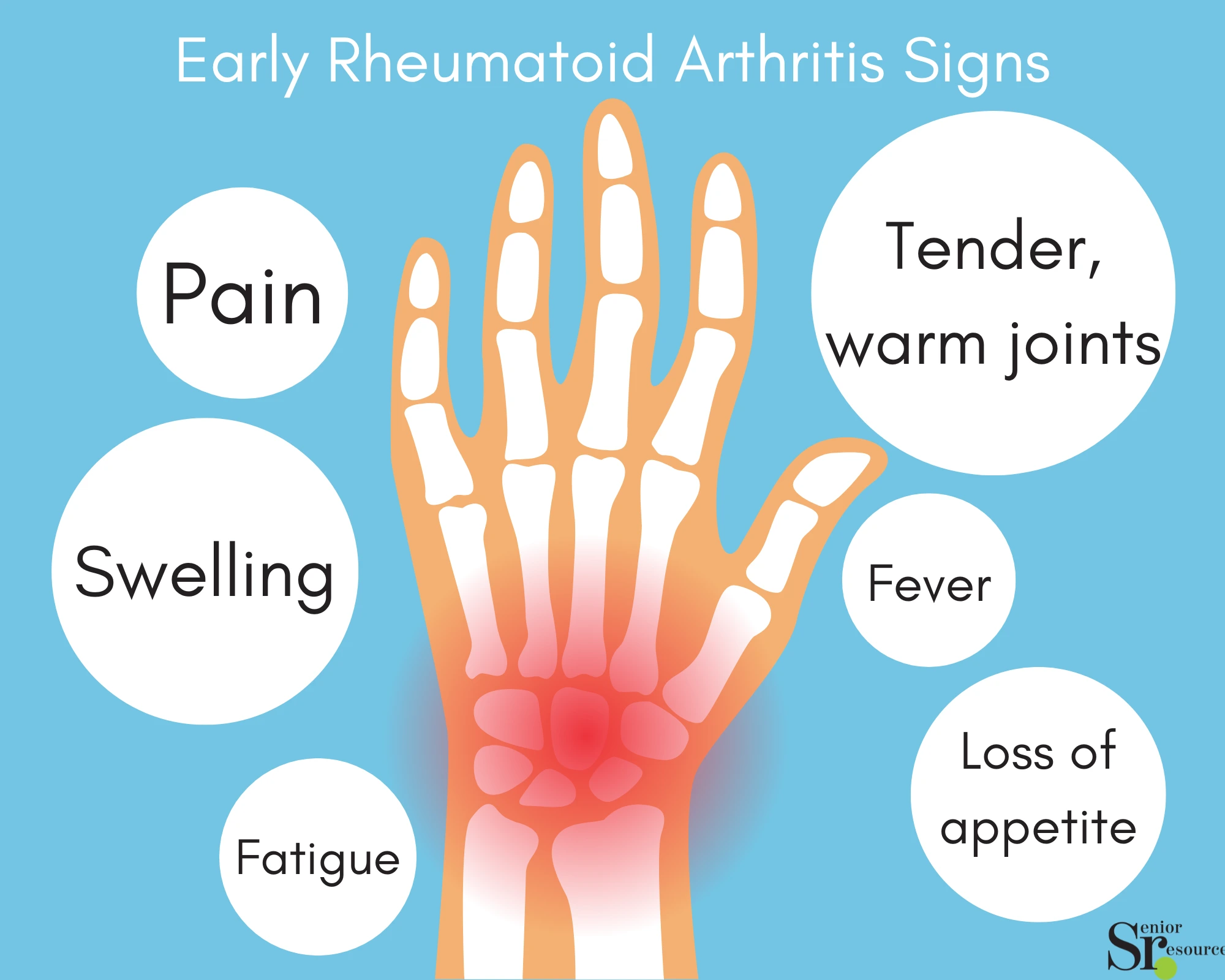
Rheumatoid arthritis is another prominent type of arthritis caused by inflammation. Unlike osteoarthritis, you can easily recognize the signs of this disease. It starts with the following symptoms:
- Pain and swelling: You may experience pain and swelling, particularly in the fingers and toes.
- Tender, warm, swollen joints: You notice that your joints feel tender to the touch and hot.
- Stiffness: You might struggle to lift your legs off the bed in the mornings or even move your whole body.
- Fatigue, loss of appetite, and fever: Sadly, this type of arthritis often is accompanied by more than pain and stiffness. If you’re feeling fatigued, feverish, or don’t have an appetite, you may have rheumatoid arthritis.
Although you may not experience these arthritis signs consistently, experiencing them once a month could indicate rheumatoid arthritis.
Early Psoriatic Arthritis Signs

Psoriatic arthritis, caused by the immune system, has early signs you can watch out for. Like other types of arthritis, it starts with:
- Painful swelling around your joints: Your fingers and toes might be especially susceptible, even resembling “sausages” at times.
- Eye pain and inflammation: Your eyes may feel hot, painful, and even itchy.
- Nail changes: Your nails may crumble or form tiny “pits.”
- Lower back pain: According to the Mayo Clinic, some people develop a condition called spondylitis as a result of psoriatic arthritis, resulting in back pain.
Early Spondyloarthritis Signs
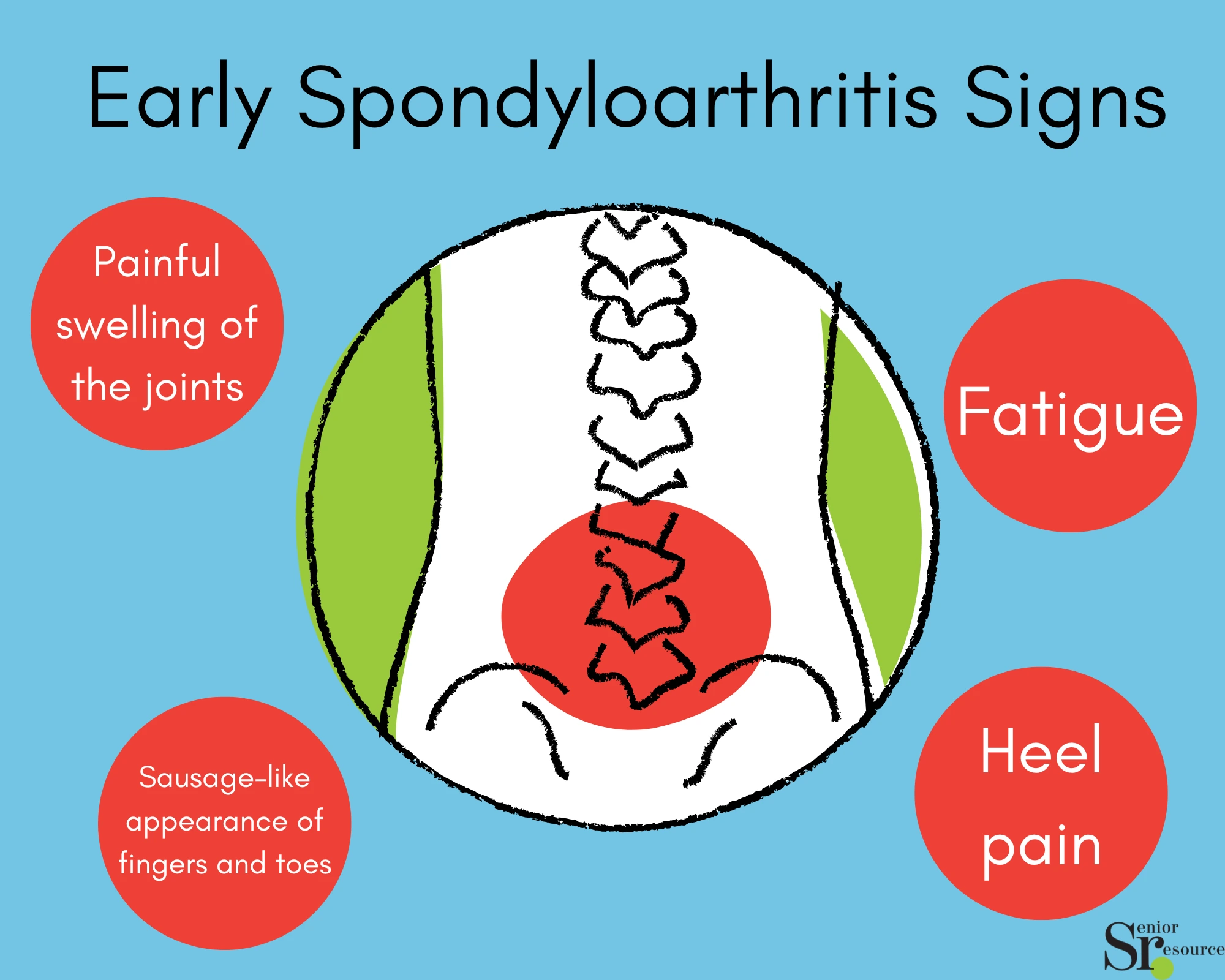
As the body ages, the back might find it difficult to support the body weight. Many might consider this a normal part of aging. However, some back pains can indicate early spondyloarthritis. Other signs you should watch out for include:
- Painful swelling of the joints: Your joints may swell and feel painful and tender.
- Fatigue: You might feel extremely tired, no matter how much sleep you get.
- Stiffness: Your back feels exceptionally stiff, even if you exercise or do stretches.
- Sausage-like appearance of toes and fingers: Your toes and fingers swell to the point of resembling sausages.
- Heel pain: Your heels ache, especially after standing for long periods.
Takeaway
Because arthritis might not be obvious at first, you may fail to catch it. Initially, you might attribute the joint pains to stress or fatigue, assuming you’re overworked. However, if you feel pain or stiffness that doesn’t alleviate with time, schedule a visit with a doctor. They can help you determine what type of arthritis you have through lab tests and imaging, such as X-rays. They may prescribe certain medications, like steroids, or recommend that you begin physical therapy.
Medicare covers arthritis diagnostics and treatment, including specific arthritis testing. Private insurance plans may also cover some of these, so do not hesitate to visit your doctor to get tested and receive treatment early.
All these signs are not meant to scare you. Arthritis doesn’t start and worsen within a day or week; it progresses slowly and weakens the joints if left untreated. If you notice any of these signs in your joints, you need to see your doctor and get treatment to put arthritis under control. Receiving early treatment prevents your joints from permanent damage. And remember, while arthritis cannot be cured, it can be managed! You can still enjoy your life and adjust to the new normal without missing a beat.
Image Credit: Canva Pro

Popular Articles About Arthritis
Originally published March 18, 2025
Author(s):